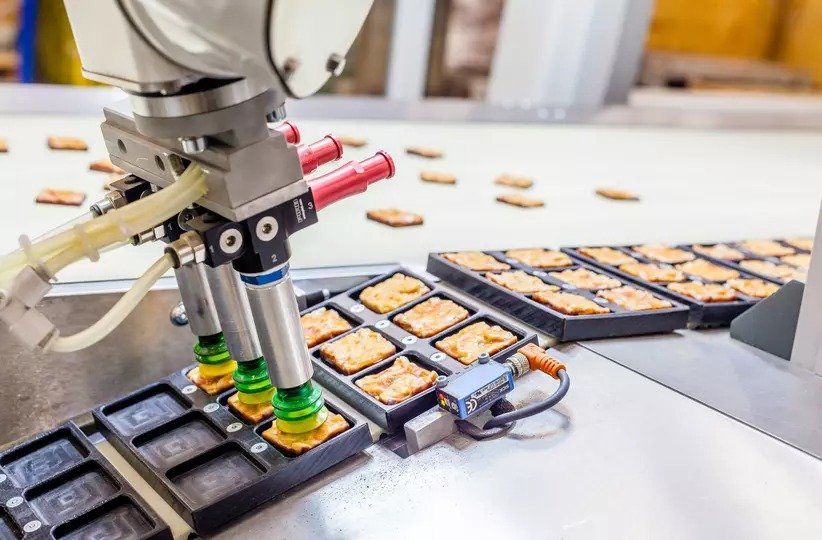
The automation food industry has experienced unprecedented transformation over the past decade, fundamentally reshaping how manufacturers produce, package, and distribute food products. With the increasing competitive consumer pressures and tough regulations enacted to guarantee improvement in the quality of production and protection of the environment, manufacturers are under increasing pressure to achieve efficiency without compromising on quality.
Modern food industry automation systems deliver the precision, reliability, and scalability that traditional manual processes simply cannot match. These state of the art applications streamline all the processes of the production, starting with the processing of the raw materials up to the finished packaging stages, with a regular production yield, and low wastage and operation expenses.
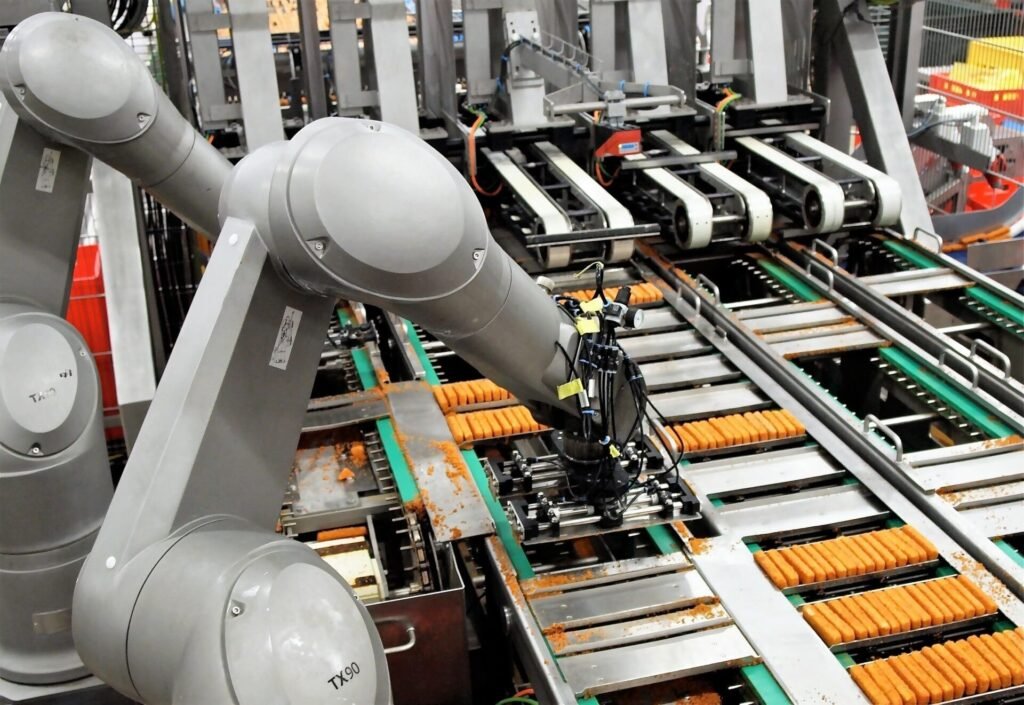
The Critical Role of Automation in Modern Food Processing
Food manufacturers operating in today’s competitive landscape recognize that embracing automation food industry technologies isn’t optional—it’s essential for survival. Facilities in production have to deal with several conflicting priorities:
- Meeting strict food safety regulations
- Maintaining consistent product quality
- Reducing labor costs
- Responding rapidly to market demands
The manual based traditional processes form bottlenecks that restrict throughput as well as inject variability undermining quality. Moreover, the labor intensive aspect of traditional food processing renders scaling operations an irritating prohibitive cost and logistic nightmare.
Food industry automation addresses these challenges through intelligent system integration. Automated production lines are continuously working with little supervision and result in a significant rise of production capacity, at the same time, reducing unit production costs. Sensors track critical parameters in real-time, ensuring they detect variations from optimum conditions before those deviations affect product quality. This proactive approach avoids expensive product recalls and safeguards the brand name. Also, the automation systems ensure that full production information is provided that allows companies to detect inefficiencies and streamline processes constantly.
Operational Efficiency Through Process Control
Modern process automation food industry solutions leverage sophisticated control systems that coordinate multiple production stages seamlessly. Programmable logic controllers (PLCs) and distributed control systems (DCS) operate elaborate recipes, readjust production parameters in real time, and provide accurate timing in a production line. These systems remove the disparities associated with manual operations and ensure unified product quality, regardless of production volume or operator competence. Variable frequency drives (VFD) maximize the performance of a motor, using less energy and making equipment last longer by using a controlled acceleration/deceleration profile.
Enhanced Product Safety and Traceability
Food safety represents the paramount concern for every processor, and automation food industry systems provide multiple layers of protection. Automated monitoring removes human error from vital control areas, maintaining parameters such as temperature, pH, and humidity within safe limits during production. If deviations occur, the systems immediately activate corrective measures or stop manufacturing altogether to prevent the delivery of contaminated products to consumers. Extensive data capture entails complex audit trails that meet regulatory requirements as well as facilitating a fast root cause analysis in the event of quality concerns arising.
Key Technologies Driving Food Industry Automation
The technological foundation of modern food industry automation encompasses several interconnected systems that work in concert to optimize operations. Understanding these core technologies helps manufacturers make informed decisions when designing or upgrading production facilities.
Industrial Automation Drives and Motor Control
Automated food processing equipment is based on precision motor control. The intelligent motor control centres are also very useful in distributing the power to the mixing equipment, conveyors, packaging machine, and refrigeration systems. Variable frequency drives vary the speed of the motors dynamically in response to production need, saving as much as forty percent of energy used by fixed speed options. These drives are also effective in enhancing the quality of processes since it allows gradual ramping of products which do not result in the damage of the product when it is being handled and transported through the various processing process.
In the new generation drive systems are now working hand in hand with the supervisory control systems and are taking in commanding signals by the higher level controllers and indicating operating conditions in real time. This two-way communication would facilitate predictive maintenance approaches which would plan servicing according to actual equipment condition, instead of the set time. Optimization of the timeliness of parts and the management of inventory of parts decrease not only costs of maintenance but also eliminate the unexpected downtime.
Building Management and Environmental Control
Temperature and humidity regulation during processing and storage space have great influence on quality and shelf life of products. Automation systems constructed will ensure the best environmental conditions at the least energy use due to the intelligent management of the HVAC systems. These systems provide constant feedback on the situation in various areas and can change the heating, cooling and ventilation to keep set points at a specific temperature. Connection to the production management systems allows automatic scheduling of the environmental parameters in response to production plans to have facilities in optimum condition prior to processing.
Energy management capabilities within building automation platforms identify opportunities for consumption reduction without compromising product quality or safety. Demand response features shift energy-intensive operations to off-peak periods when electricity costs are lower. Comprehensive monitoring reveals inefficient equipment that should be replaced or upgraded, supporting data-driven capital investment decisions.
Intelligent Control Panels and Switchgear
Consistent electrical fault systems provide a constant power supply to sensitive production devices. Control panels and low voltage switchboards offer centralized control over power distribution and utilize enhanced protection measures to prevent equipment damage and ensure operator safety. Intelligent motor control centers combine motor starters, variable frequency drives, and protection devices into standardized, factory-tested assemblies, simplifying installation and saving commissioning time.
Some of these systems have built in predictive monitoring capabilities which monitor the electrical parameters continuously without human operator intervention and the anomalies detected by the systems give indicators of the emergence of, yet undetected faults which can cause equipment failures before they occur. The proactive model reduces the unexpected downtimes and prolongs the life of equipment adding to the set of optimized settings. Connection with enterprise management systems gives the production managers the real-time idea of electrical system performance and patterns of energy consumption.
Strategic Benefits of Automation Food Industry Implementation
Manufacturers investing in automation food industry solutions realize benefits that extend far beyond improved operational efficiency. These strategic benefits facilitate the reinforcement of competitive positioning and long run sustainable growth.
Labor Optimization and Workforce Development
While food industry automation reduces dependence on manual labor for repetitive tasks, it simultaneously creates opportunities for workforce advancement. The physically demanding and repetitive tasks are managed through automated systems so that employees should attend to more value-added duties which need problem solving abilities and technical expertise. This change enhances better job satisfaction and fewer injuries in the workplace which are related to repetitive movement and excessive lifting.
Organizations that have adopted automation should embark on extensive training processes that can enable its workforce to be skilled in using, maintaining, and troubleshooting complex systems. Such workforce development develops prospects of career development, which enhances retention levels, and organizational capacity. Technicians skilled in process automation food industry technologies command premium compensation, making these positions attractive to talented individuals seeking stable, rewarding careers.
Quality Consistency and Brand Protection
Product consistency represents a critical competitive differentiator in saturated food markets where consumers have numerous alternatives. Automation food industry systems eliminate variability inherent in manual processes, ensuring every unit meets specifications precisely. Automated quality control systems inspect products continuously using vision systems, weight checks, and sensor measurements that detect defects invisible to human inspectors.
This consistency will also help in upholding the brand reputation as quality products will not reach consumers. Manufacturers become spared of expensive recalls that spoil customer confidence and create unfavorable publicity. Long-term losses in the market share, which are hard to recover, are also a financial consequence and not direct costs only. Automated quality assurance gives the confidence to increase the distribution channels and venture into the new markets where there might be a deficiency in the brand recognition.
Scalability and Market Responsiveness
The conventional food processing businesses are faced with a big challenge of scaling production to the ever increasing demand. Manual processes imply its proportional growth of workforce, and this network barrier causes the recruitment and training of the workforce to create plateaus in growth rates. Food industry automation systems scale more efficiently, allowing manufacturers to increase output substantially with minimal additional labor requirements.
Universal automation systems are dynamic to adapt to new product mixes and output rates. Parameters of various products are stored in recipe management systems which are useful in allowing quick changeovers to reduce downtime between production cycles. This flexibility promotes product diversification and customization approaches in order to respond to changes in consumer preferences. It is more efficient in the way that manufacturers are able to adjust to the seasonal changes in demand, increasing or decreasing production without the associated delays of having to reset the workforce.
Implementation Considerations for Process Automation Food Industry Projects
Successfully deploying process automation food industry solutions requires careful planning that addresses technical, organizational, and operational factors. Manufacturers need to treat the process of automation as a strategic process and not as an implementation of the technology.
Comprehensive Needs Assessment
Successful automation initiatives assume an analytical investigation of the current processes, uncovering the bottlenecks, quality, and other safety concerns, which the automation should help resolve. This evaluation is a measure of existing performance in relation to the important measures such as throughput, waste rates, energy use, and the quality of products. With creating baseline measurements, the benefits of automation would be accurately evaluated once it is implemented.
Stakeholder engagement during the assessment phase ensures automation solutions address actual needs rather than theoretical improvements. Production managers, maintenance technicians, quality assurance personnel, and line operators all provide valuable perspectives on operational challenges and opportunities. Their input guides system design decisions that deliver practical benefits while maintaining user acceptance.
Technology Selection and Integration
The automation food industry market offers numerous technology options, making careful vendor selection critical to project success. Manufacturers need to focus on suppliers who have a proven history of being applied in food processing processes and have industry-sensitive knowledge of what sanitary design entails, and how to withstand the harsh environment and regulatory requirements. They should be compatible with the current equipment and management programs with no integration with proprietary systems that cause the vendor lock-in and reduce the ability to be flexible in the future.
Inter-line standardization eased the training process, decreased the quantity of spare parts and minimalized the maintenance processes. Open architecture The use of industry-standard communication protocols in open architecture systems allows it to easily combine the equipment of several suppliers. This design offers the flexibility to choose the best in class component in every banked functionality instead of the opting of tradeoffs that are in one vendor offerings.
Phased Implementation Strategy
Massive automation initiatives are highly risky in terms of their execution, and they pose risks to the schedule, cost, and continuity of production. Phased implementation strategies reduce these risks as they address manageable project scopes to prove value before the succession of subsequent phases. The first stages are often centered on high-impact applications in which automation has straightforward advantages and technical complexity is not overly challenging.
Each phase provides learning opportunities that inform subsequent implementations. Organizations develop internal expertise in automation technologies while establishing relationships with equipment suppliers and system integrators. This capability building creates competitive advantages that extend beyond individual projects, positioning manufacturers to optimize operations continuously as technologies evolve.
Future Trends Shaping Automation Food Industry Development
The automation food industry continues evolving rapidly as emerging technologies create new capabilities and business models. Forward-thinking manufacturers monitor these trends carefully, identifying opportunities to gain competitive advantages through early adoption.
Artificial Intelligence and Machine Learning Integration
Cutting-edge analytics systems process production data to determine trends and ways to optimize things that cannot be done by humans. Machine learning algorithms not only predict to prevent failures of equipment beforehand, schedule the process to maintain optimum maintenance, and automatically adapt the process settings to achieve the desired quality of the product as the characteristics of raw materials change. Such systems are also self-learning based on the experience of operation, gaining improved performance with time without being programmed.
Artificial intelligence-based computer vision systems monitor products with unusually high precision and accuracy. These systems are able to detect minute issues, which the human inspectors are not able to, and also remove the fatigue and inconsistency which is there in the manual inspection. Deep learning models consisting of thousands of products pictures identify normal distribution and claim real faults that need remedial measures.
Industrial Internet of Things Connectivity
Connected sensors throughout production facilities generate vast quantities of real-time data about equipment performance, environmental conditions, and product characteristics. Cloud-based platforms aggregate this information, providing comprehensive visibility across multiple facilities and enabling centralized management of distributed operations. Remote monitoring capabilities allow technical experts to troubleshoot issues and optimize processes regardless of physical location.
Integration between food industry automation systems and enterprise resource planning platforms creates end-to-end visibility from raw material procurement through finished product distribution. Such integration makes highly complex planning algorithms that minimize the value of inventory, production schedules and logistics in order to be highly profitable by fulfilling customer service promises.
Sustainable Manufacturing Practices
Environmental sustainability has become a major business issue brought about by regulatory needs, customer demands, and corporate responsibility obligations. Automation food industry systems support sustainability initiatives through multiple mechanisms. Accurate process management enables minimal raw material wastage and minimizes the amount of energy spent on a unit tracked. The recycling systems used to recycle water keep checking the quality and thus one can reuse it in a proper manner. A detailed monitoring of the environment also measures the environment accurately which can be used to support reporting needs and also allow one to see ways of improving it.
Partnering for Success in Food Industry Automation
The complexity of modern automation food industry implementations demands specialized expertise that extends beyond equipment selection and installation. In order to have successful projects, the partners must be well versed with automation technologies as well as the food processing business. These partners direct the manufacturers in the total automation path including the needs evaluation to further optimization and maintenance.
With over seventy-five years of experience delivering electrical engineering solutions across East Africa, IET brings unmatched expertise to process automation food industry projects. We also include the drives of industrial automation, intelligent motor control centers, building management solutions, as well as power quality systems all being key elements of an efficient food processing automation system. We collaborate with the world market leaders to supply the proven technologies and also we have the capacity to offer local engineering possibilities and local service capabilities that guarantee optimum long term performance.Our team has the solutions to the green-field and their expansion, as well as the modernization of older systems, which perfectly match your goals and requirements. Contact IET Africa today to discuss how our automation expertise can transform your food processing operations, enhancing efficiency, quality, and profitability while positioning your organization for sustainable growth in an increasingly competitive marketplace.
Leave a Reply