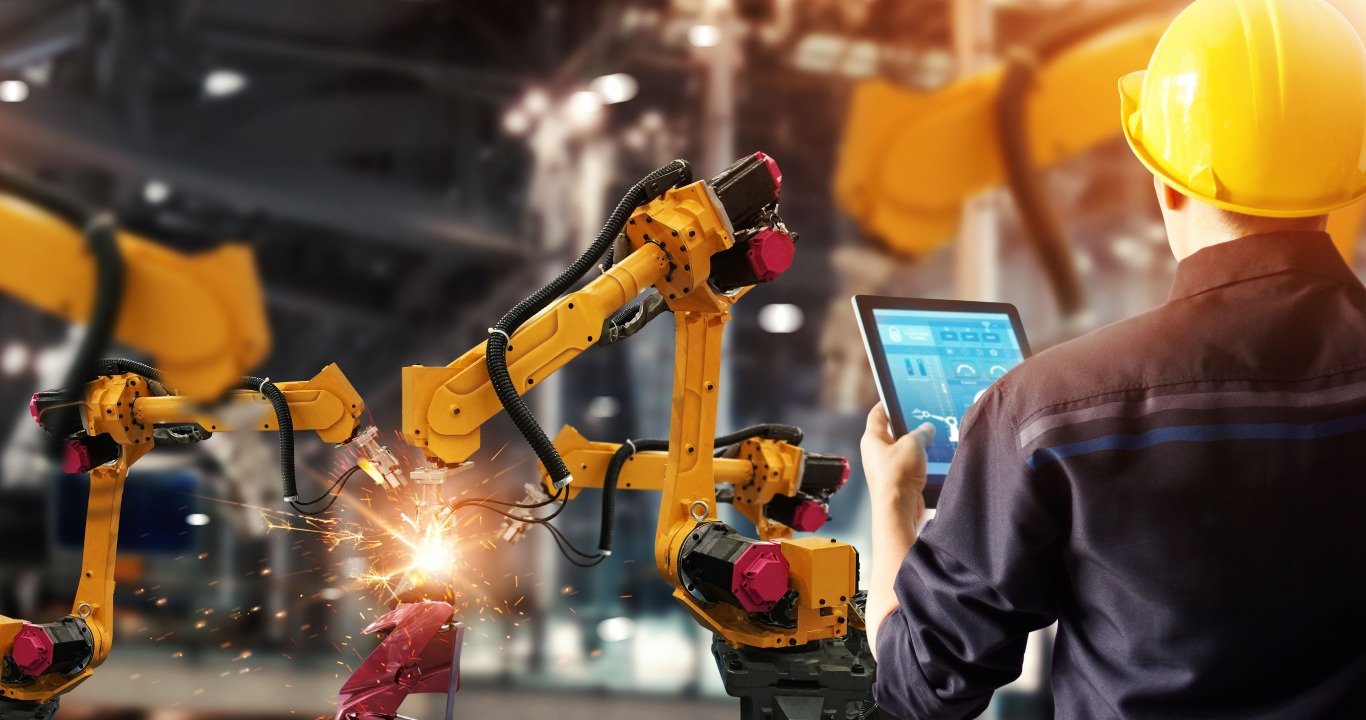
The East African region is on the edge of change. Industrial automation and robotics are reshaping the manufacturing landscape across Kenya, Uganda, and Tanzania. Gone are the days when manual processes prevailed at the production floors. Modern technologies in the form of smarter factories are appearing all over the region today. This change goes beyond technological progress. It promises a complete shift of competitive approaches of East African producers in the world market.
The adoption of automation in industries has accelerated remarkably. The production sites have become complex with automated controls and robotics. These are technologies that meet productivity and lower the costs of operation. In addition, they enhance the quality of products and safety at the workplace. Whether or not to automate is no longer a question. Manufacturers instead pose the question of how they can institute these transformative solutions as fast as they can.
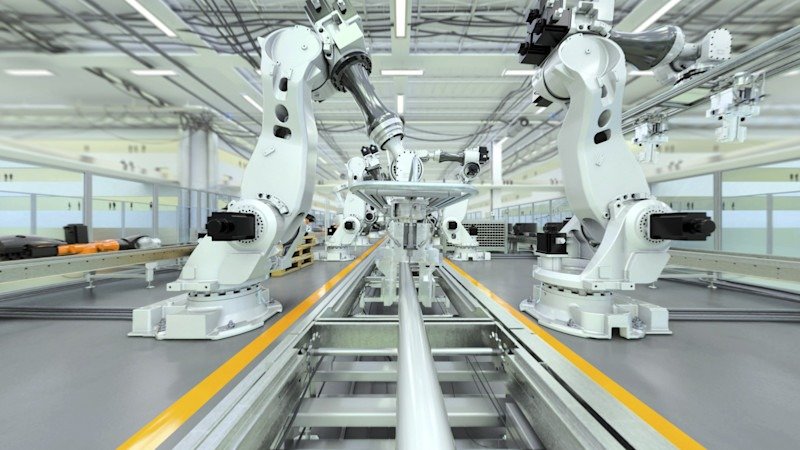
Understanding Industrial Automation in Modern Manufacturing
What industrial automation means varies across different sectors. It entails the management of the equipment using control systems. Human intervention in production processes is reduced when it comes to these systems. The technology is simple mechanization to elaborate cyber-physical systems. The levels present different benefits to manufacturers who aim at gaining competitive advantages.
Industrial process automation consists of a number of major aspects. Most systems are based on Programmable logic Controllers (PLCs). These gadgets are used to operate machinery with accuracy using digital inputs. Variable Frequency Drives (VFDs) controll the speeds of the motors. Actuators and sensors are used to give real time optimisation feedback. Combined the factors produce smooth production conditions.
The impact extends beyond factory floors. Industrial automation and robotics influence supply chain management significantly. Automated warehousing systems streamline inventory control. Real-time tracking ensures materials arrive precisely when needed. This integration reduces waste and improves cash flow. Consequently, manufacturers achieve leaner operations with enhanced profitability.
The Rise of Robotics in East African Manufacturing
Robotics and industrial automation have become inseparable in modern facilities. Industrial robots perform tasks with an accuracy that humans cannot match. They never tire, nor do they compromise quality. Currently, industries depend heavily on robotic systems for welding, painting, assembly, and material handling. Furthermore, these machines work alongside human operators in shared workspaces.
Robotic technology within East Africa continues to be invested in every year. Packaging and palletizing It uses robots in food processing plants. They are used in the manufacture of automotive components by medical precision assembling. Pharma companies use robots in handling sterile products. This is because modern robotics are useful in industries due to their versatility.
There is also a reduction in the prices of robotic systems. This democratized access to state-of-the-art manufacturing skills. The small and medium enterprises can now deploy simple robotic solutions. In the meantime, the bigger manufacturers have more advanced multi-robot cells. Scalability is a factor that promotes widespread usage in the region.
Key Benefits Transforming East African Manufacturing
1. Enhanced Production Efficiency
Automation in industries dramatically increases throughput rates. Machines do not take breaks or change shifts. Machines operate without taking breaks or changing shifts. They complete production cycles at a faster rate while maintaining standard quality. Predictive maintenance decreases downtime, and these advancements directly increase output volumes.
2. Superior Quality Control
Industrial automation and robotics eliminate human error from critical processes. Automated inspection systems capture defects that the human eye cannot see. These systems manufacture all products to exact specifications. This approach ensures that quality remains predictable and measurable. Consequently, companies elevate customer satisfaction levels and reduce the number of returns.
3. Improved Workplace Safety
Risky jobs are transferred to machine laborers. Robotics and industrial automation handle hazardous materials safely. Employee health is no longer at risk of hot, noisy, or poisonous surroundings. The numbers of accidents reduce significantly in automated plants. Employees target positions involved with supervising and demanding the judgment and flair.
4. Cost Optimization
Preliminary expenses of automatizing processes in industries lead to savings in the long run. The cost of labor is constant as production increases. Optimization of energy is through intelligent systems. Strict regulations curtail the material that industries generate as waste. Companies usually achieve ROI after a span of three years.
Critical Technologies Driving the Revolution
1. Programmable Logic Controllers
PLCs are the brains of the automated systems. They can perform complicated protocols at milliseconds accuracy. The modern units are integrated to the enterprise networks. Intuitive interfaces make programming easier. This is accessible which allows quick implementation and troubleshooting.
2. Variable Frequency Drives
VFDs transform motor control in the production. They change demand speed and torque. Energy use reduces by 30-50% as compared to fixed speed systems. Equipment Life span is enhanced by slow starting and shutting. Technology is vital when it comes to sustainable operations.
3. Industrial Internet of Things
IoT connectivity can turn conventional equipment into smart equipment. As parameters of performance are monitored by sensors. Data consolidation occurs on the cloud platforms. Manufacturers are able to have an unparalleled visibility of operations. This fact is used to initiate constant improvement.
4. Artificial Intelligence Integration
AI enhances industrial automation and robotics capabilities exponentially. Machine learning is used to optimize production timetables. Predictive analytics predict the equipment failures in advance. There is autonomy in quality control systems to detect defects. The technology is updated to meet exclusive operational requirements.
Sector-Specific Applications Across East Africa
1. Food and Beverage Processing
Automation in industries transforms food production throughout the region. There is a significant production of automated filling lines that ensure hygiene. Palletizers are robotic and are able to work on heavy loads. The safety of products is guaranteed through temperature control systems. Traceability systems follow the path of ingredients sourced to the consumer.
2. Textile and Garment Manufacturing
Automation which involves cutting and sewing enhances accuracy and efficiency. Inspections of quality identify flaws in fabrics automatically. Robots used in handling materials transfer items between working areas. Raw material optimization is done by the inventory management systems. These add values to competitiveness in the international markets.
3. Chemical and Pharmaceutical Production
Robotics and industrial automation ensure regulatory compliance in sensitive environments. Automated batching systems maintain precise formulations. Clean room robots handle products in sterile conditions. Documentation systems create audit trails automatically. Safety protocols execute without human oversight.
4. Metal Fabrication and Assembly
Welding robots create consistent joints with minimal waste. CNC machines produce complex parts from digital designs. Automated material handling reduces manual lifting injuries. Quality inspection occurs inline without slowing production. The automation of industrial processes enables just-in-time manufacturing.
Industrial Automation and Robotics: Overcoming Implementation Challenges
1. Skills Development Requirements
East African manufacturers face workforce training challenges. Industrial automation and robotics require specialized technical knowledge. Companies invest in comprehensive training programs. Partnerships with technical institutions develop relevant curricula. This commitment ensures operators maximize technology capabilities.
2. Infrastructure Considerations
Stable power supply is still of critical importance to automated systems. A large number of facilities have backup generators and UPS. The needs of network connectivity grow with the use of the IoT. The manufacturers upgrade electrical infrastructure beforehand. These investments insure the equipment of the automation against damage.
3. Financial Planning
Capital requirements for automation in industries can seem daunting. The availability of flexible financing options however is now available in East Africa. The cost is distributed in phases by phased implementation strategies. The lease arrangements lower the entry costs. Strategic planning is informed by the calculations of the return on investment.
4. Change Management
The organizational culture should be similar to the adoption of technology. Leadership communicates the benefits of industrial automation and robotics clearly. Employees know how robots boost and not kill jobs. The implementation can be staged, which means that teams can comfortably get used to it. Success stories create a momentum on additional automation.
Future Trends Shaping East African Manufacturing
Collaborative Robotics
Cobots can perform harmlessly and no barriers exist to work with human operators. These systems combine the flexibility of humans and the precision of robots. Developments of applications grow at different galloping rates in different sectors. The technology can be of great help to small manufacturers. Cobots investment increases with the development of capabilities.
Advanced Analytics
It would become standard to make decisions using data. There is a huge flow of information that is created through automation of industrial processes. Critical analytics systems convert information to actionable ideas. It is through this intelligence that manufacturers maximize operations at a constant. Data savvy organizations benefit by gaining competitive advantages.
Sustainable Manufacturing
Environmental considerations drive investments in automation. Energy-efficient systems achieve lower carbon footprints. Precision control aids in waste minimization, which facilitates sustainability. Recycling systems of water are part of production automation. These are capabilities that are agreeable with global environmental standards.
Digital Twin Technology
The models of physical systems, which are virtual, allow advanced optimization. Changes in digital lands are tested and then introduced by engineers. Accurate simulations enhance planning of production. Maintenance plans are optimized on the basis of virtual performances. This technology ensures that there is quicker innovation and minimized risks.
The Strategic Imperative for East African Manufacturers
The competitive force requires fast technology. Global manufacturers leverage industrial automation and robotics extensively. Companies in the East African market have to keep up with such capacities. Lack of automation will expose it to a loss of market share. But there are sustainable benefits that come about as a result of strategic implementation.
Government policies increasingly support manufacturing modernization. Tax incentives encourage technology investments. Training programs develop necessary technical skills. Infrastructure improvements enable reliable automation operations. This supportive environment accelerates transformation across the region.
The automation in industries trend will intensify dramatically. The introduction of artificial intelligence increases the possibilities of automation constantly. The expenses keep reducing as the performance increases. First mover creates a leadership in the markets. Competitive automation has an open window of implementation.
Conclusion
The revolution in industrial automation and robotics transforms East African manufacturing fundamentally. Those companies that adopt such technologies enjoy high efficiency and quality. They make the working environments safer and minimize the cost of operation. Industrial process automation no longer represents an optional enhancement. Instead, it defines the pathway to sustained competitiveness.
With over 75 years of experience in East Africa, IET delivers comprehensive industrial automation and robotics solutions. Our expertise spans industrial automation drives, control systems, and building management solutions. to Kenya, Uganda and Tanzania, we collaborate with the world leading manufacturers to introduce international technology. Our team is fully designed to commission and train project support. Contact us today to discover how robotics and industrial automation can transform your manufacturing operations and position your business for future success.
Leave a Reply