Blog

  • Mastering the Building Automation System Architecture for Efficiency and Scalability

    Mastering the Building Automation System Architecture for Efficiency and Scalability

    The architecture of building automation system represents the foundational framework that enables modern buildings to operate intelligently, efficiently, and responsively. This architecture is not only about how various elements are linked with others. It’s also about how such systems form a unified ecosystem to deal with HVAC systems as well as security methodology. For professionals tasked with specifying, designing, or maintaining these systems, a deep understanding of building automation system architecture is essential for delivering solutions that meet both current needs and future expansion requirements.

    architecture of building automation system

    The modern commercial and industrial plants require not a simple environmental control. They require sophisticated building automation systems and services that can adapt to changing occupancy patterns, optimize energy consumption in real-time, and provide actionable data for facility management decisions. The architecture of building automation system design has evolved significantly, incorporating network technologies, open protocols, and cloud connectivity that transform buildings into intelligent assets rather than static structures.

    Understanding the Foundational Layers of Building Automation System Architecture

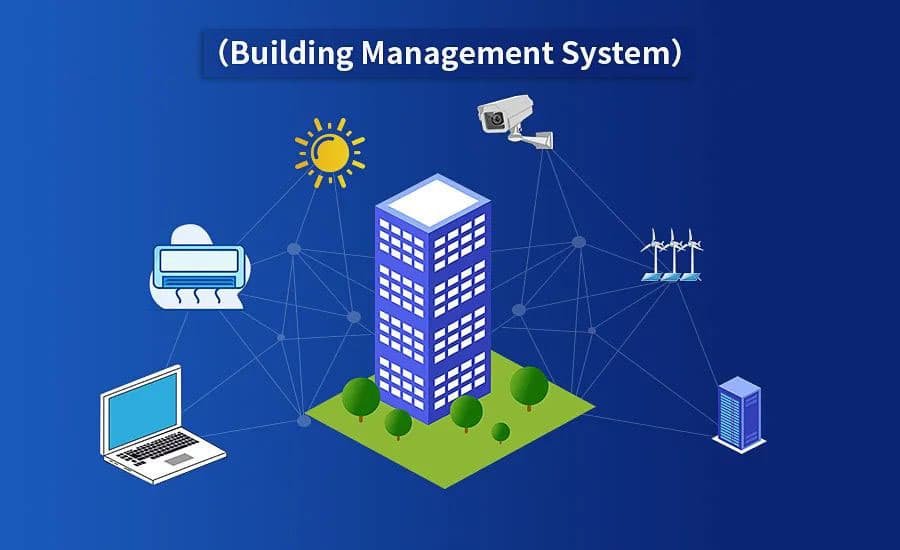
    The architecture of building automation system design operates on multiple interconnected layers, each serving distinct functions while contributing to the overall system performance. Fundamentally, this architecture is similar to a pyramid with field-level devices at the bottom, followed by controllers, network infrastructure, and finally, the management interface with operators provided an interface with the whole system.

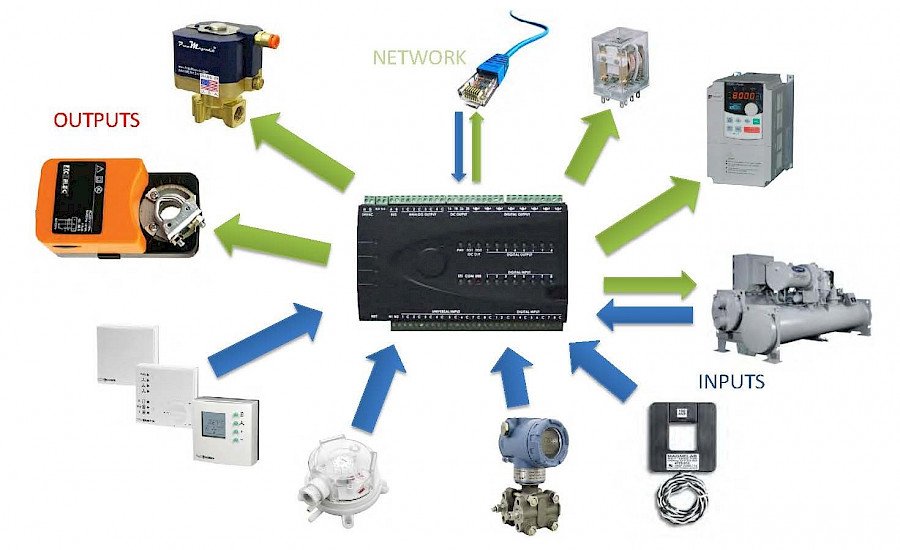
    The field level represents the most fundamental layer in the architecture of building automation system. This consists of sensors, actuators, and end devices that physically interact with building systems. The systems measure temperature, humidity, pressure, occupancy, and other parameters that operate dampers, valves, motors and switches. The cleverness of the current field devices has escalated exponentially and most of them have local processing facilities that reduce the load on the network and enhance the response time.

    architecture of building automation system

    Network infrastructure forms the circulatory system within the architecture of building automation system, enabling communication between all components. Modern implementations typically employ a combination of wired and wireless protocols, with Ethernet-based networks becoming increasingly prevalent at the supervisory level. BACnet, Modbus, and LonWorks remain industry standards, though proprietary protocols from manufacturers like Trane building automation system solutions continue to coexist within many installations. The network architecture should be in a way that supports the bandwidth, provide

    Components of Building Automation System: The Building Blocks

    Understanding the components of building automation system architecture requires examining each element’s role and how they interconnect to create functional intelligence. Controllers are the level of decision making, which takes data input through sensors and the control logic to control outputs. These range from application-specific controllers dedicated to single tasks like fan coil unit control to more sophisticated programmable controllers capable of managing multiple systems simultaneously.

    The supervisory layer within the architecture of building automation system provides centralized monitoring and management capabilities. With workstations with specialized software, the operator is able to see the performance of the system and reach setpoints, schedules and alarm responses. Modern interfaces incorporate dashboards that present complex data through intuitive graphics, making it easier for facility managers to identify trends and anomalies that might indicate equipment problems or optimization opportunities.

    Data management and storage infrastructure has become increasingly important in contemporary building automation system architecture. The analysis of energy, predictive maintenance, and performance benchmarking is possible through historical data collection. On-demand storage services are popular now. They have an extremely large capacity and you can access them from anywhere so long as you have internet access. This evolution supports the integration of IoT building automation system concepts, where traditional building systems converge with enterprise IT infrastructure to create truly smart buildings.

    Integration Strategies Within Building Automation System Architecture

    The architecture of building automation system implementation must account for integration with both building systems and enterprise networks. HVAC systems typically receive priority in automation strategies, but lighting control, access security, fire safety, and power monitoring all benefit from inclusion in the overall architecture. Open protocol adoption facilitates integration by enabling equipment from different manufacturers to communicate effectively, reducing vendor lock-in and providing flexibility for future modifications.

    Building automation for landlords and property management companies requires architecture that supports multi-tenant scenarios. It will entail the capacity of partitioning systems, to ascertain utility expenses, and to give tenants proper access to controls which impact their spaces along with the preservation of the integrity of building wide systems. The architecture of building automation system in commercial real estate must balance individual comfort preferences with overall building efficiency objectives.

    Enterprise system integration extends the building automation system architecture beyond traditional boundaries. The work order generation is streamlined through links to computerized maintenance management systems in case of equipment faults. Demonstration The systems can integrate with energy management systems to participate in demand response and reduce utility costs. Utility information is forwarded to the financial systems to properly track the budget and bill tenants. These links make building automation a tool that operates independently to a one that is an operational tool that helps in achieving organizational goals.

    Building Automation System Installation: Architectural Considerations

    Proper building automation system installation begins with architecture design that considers both current requirements and future growth. Physical infrastructure planning determines where to locate controllers, how to power devices, and what cable to utilize. Modern installations increasingly rely on wireless sensors and battery-powered devices to reduce installation costs and improve flexibility, but the core network backbone still requires careful physical planning.

    The architecture of building automation system must account for system scalability. The capacity of controllers, network bandwidth, and server processing speed ought to be in line with the expected growth without having to change it wholesale. This long-term mindset avoids the frequent situation in which effective initial implementations are curtailed by architecture constraints in situations where the people owning them desire to proceed with automation to other regions or systems.

    Commissioning represents a critical phase in building automation system installation, verifying that the implemented architecture performs as designed. This process inspections communication channels, verifies control programmes, calibers sensors and records system setup. Thorough commissioning prevents the operational problems that plague poorly executed installations, ensuring that the sophisticated architecture of the building automation system delivers its promised benefits from day one.

    Advanced Architectural Concepts in Modern Building Automation

    Contemporary building automation system architecture increasingly incorporates edge computing capabilities that distribute intelligence throughout the system rather than concentrating it centrally. Edge devices are capable of performing local control logic and are less reliant on the network and enhance response times of time-sensitive functions. This distributed architecture will increase resilience in the system due to the fact that local operations are not halted when there is a disruption in communication with central servers.

    Cybersecurity considerations have become paramount in architecture of building automation system design as these systems connect to corporate networks and the internet. These isolations are network segmentation between automation traffic of buildings and other enterprise traffic, which minimizes the attack area. Encryption will be used to deliver security to the data flowing between systems whereas the authentication will make sure that authorized users can only access the system functions. The architectural design should take into consideration regular security updates and patch management to keep pace with the changing threats.

    The integration of artificial intelligence and machine learning represents the frontier of building automation system evolution. The predictive features offered by these technologies make it possible to predict the possible failure of equipment before its implementation, implement relevant control strategies depending on the observed patterns, and adapt to the transformation of specific conditions automatically. The architecture of building automation system must provide the data infrastructure necessary to support these advanced analytics, including adequate storage, processing power, and connectivity to cloud-based services where intensive computations typically occur.

    Selecting the Right Architecture for Your Facility

    Choosing the appropriate architecture of building automation system depends on numerous factors including building size, complexity, existing infrastructure, budget constraints, and operational objectives. Smaller facilities may use a simplified architecture that incorporates packaged controllers that have preset sequences whereas large campuses need to be designed with sophisticated hierarchies and multiple network levels with high redundancy.

    The preferences the owner has concerning the openness of the system play an important role in the architectural choices of the owner. Open systems that are entirely based on common protocols are the most flexible and competitive without service providers but might present more technical expertise that might be difficult to properly manage. Proprietary solutions from established manufacturers like Trane building automation system offerings provide tightly integrated packages with single-source responsibility but potentially limit future flexibility.

    The decision between on-premises and cloud-based architectures represents another fundamental choice in building automation system design. Cloud applications save the need of installing local infrastructure, and allow accessibility anywhere as long as it has an internet connection, however, they come with a recurring subscription fee. Mixed strategies of using the local controllers on important functions with cloud analytics and management is gaining more popularity, achieving a balance between reliability and advanced features.

    Conclusion

    The architecture of building automation system design fundamentally determines how effectively a building can meet its operational, comfort, and efficiency objectives. Starting at the sensors and actuators on the field up to network infrastructure then to supervisory workstations up to cloud analytics, every architectural layer of the system adds to the overall ability. Understanding these architectural principles enables informed decisions about building automation system installation, integration strategies, and future expansion planning that align technology investments with organizational goals.

    Since its inception seven decades ago, IET has been leading the pack in providing complete electrical and automation solutions throughout East Africa. Our expertise in building management solutions encompasses the complete architecture of building automation system design, implementation, and support. Whether you’re planning a new building automation system installation, upgrading existing infrastructure, or seeking optimization of current systems, IET provides the technical knowledge and regional experience necessary to deliver solutions that perform reliably in East African conditions. Contact us today to discuss how our proven approach to building automation can transform your facility’s operational performance and efficiency.

  • Why Your Facility Needs Integrated Industrial Control & Automation

    Why Your Facility Needs Integrated Industrial Control & Automation

    Modern manufacturing demands precision, efficiency, and reliability. However, in most facilities, there is a problem of the outdated systems and disintegrated processes. Industrial control & automation addresses these challenges head-on. It changes the ways that facilities are run that save money and enhance quality of output. This technology is not only good, but it is becoming a requirement of competitive advantage.

    The modern world of industries demands to be integrated to facilitate solutions that are flexible. Understanding control and automation fundamentals helps facilities make informed decisions.

    Understanding Industrial Control & Automation Systems

    Industrial controls and automation combines hardware and software to manage facility operations. These systems monitor, control, and optimize manufacturing processes automatically. Sensors collect real-time data from equipment and production lines. Controllers process this information and make instantaneous adjustments. The outcome is a smooth running that minimally involves human intervention.

    industrial control & automation

    Core Components of Automation Systems

    Every effective control system automation includes several critical elements. The brain of the system is the Programmable Logic Controllers (PLCs). They carry out control algorithms and communicate among field devices. Human-Machine Interfaces (HMIs) provide visual feedback to the operator. The SCADA systems collect data on various points and make them centrally monitored. Variable Frequency Drives (VFDs) have the advantage of controlling the speed of the motor. Combined these elements form a unified working system.

    Types of Control Systems

    Different facilities require different approaches to industrial process control and automation system implementation. Embarkation systems control singly and individual machines and processes. Continuous process control deals with such operations as chemical mixing or refining. Production is controlled in batches of production. Sequential control involves control that takes processes through pre-defined procedures. All the types have their industrial needs.

    Benefits of Integrated Industrial Control & Automation

    Implementing comprehensive industrial control & automation delivers measurable advantages. First, operational efficiency increases dramatically across all departments. Energy consumption drops as systems optimize resource usage continuously. Product quality improves through consistent, repeatable processes. Labor costs decrease while worker safety significantly improves. Equipment lifespan extends through predictive maintenance capabilities.

    1. Enhanced Production Efficiency

    Control and automation systems eliminate bottlenecks in production workflows. Machines operate at optimal speeds without manual adjustment. Downtime reduces as systems detect problems before failures occur. Production schedules adapt automatically to changing demands. Real-time monitoring identifies inefficiencies for immediate correction. These improvements translate directly to bottom-line results.

    2. Improved Safety Standards

    The most important thing in an industrial setting nowadays is safety. Industrial controls and automation minimize human exposure to hazardous conditions. The systems automatically shut down on sensing hazardous situations. Access controls prevent unauthorized personnel from dangerous areas. Emergency protocols execute instantly without human decision delays. The logging will be thorough and will give safety records.

    3. Cost Reduction Strategies

    Financial benefits of control system automation extend beyond obvious savings. The energy management systems save 20-30% of utility costs. Reduction of waste generated by the accurate control decreases the cost of materials. The maintenance becomes proactive and not reactive, preventing expensive breakdown. The optimization of labor enables re-deployment of the staff to the value-adding activities.

    Key Technologies in Modern Industrial Control & Automation

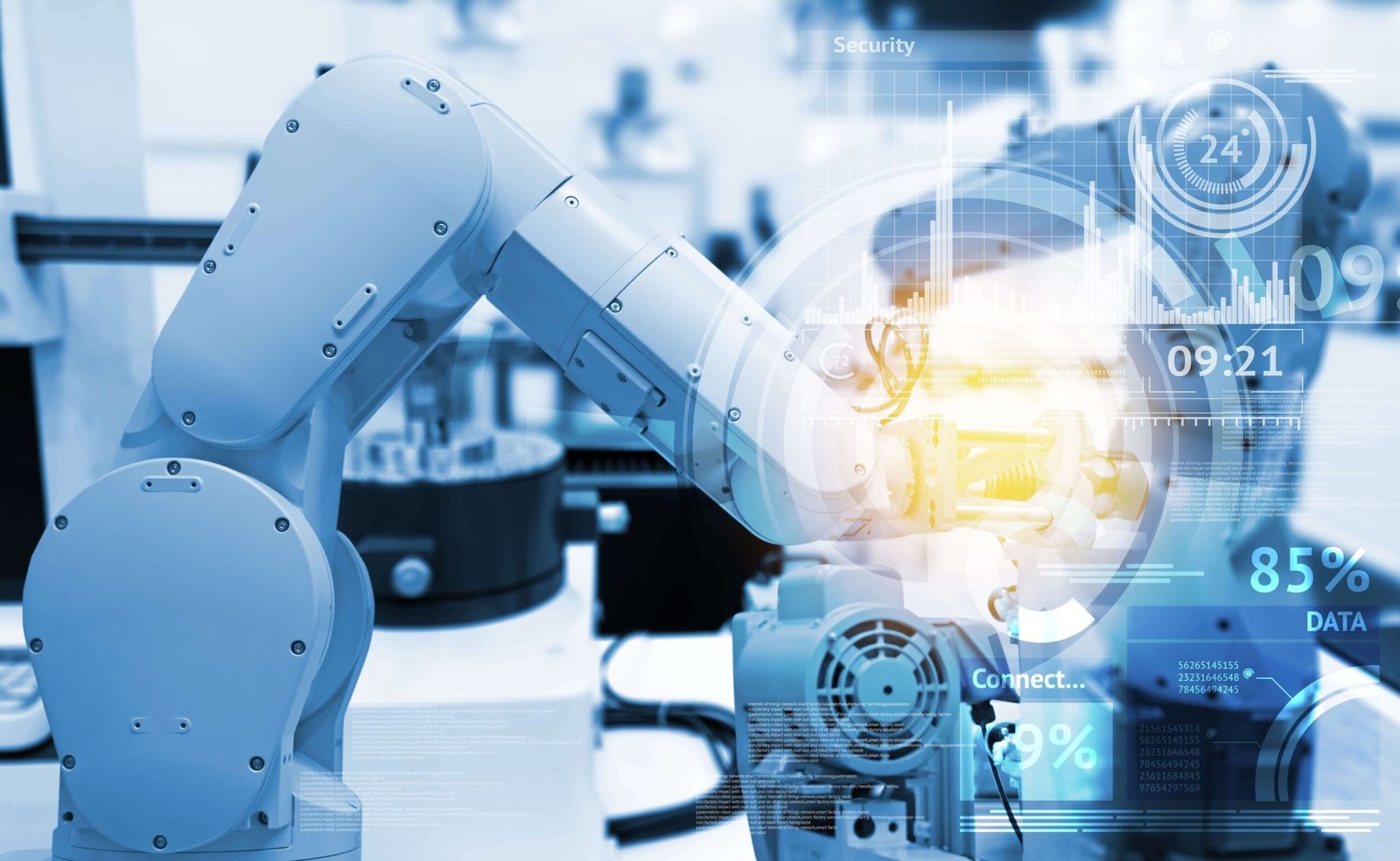
    Today’s industrial control & automation leverages cutting-edge technological innovations. IoT sensors offer more details on data than ever. Artificial intelligence extracts patterns that can not be determined by people easily. Cloud computing is able to monitor or control remotely. Edge computing processes data nearer to responding to data. Such technologies are in collaborative systems.

    1. Industrial Internet of Things (IIoT)

    IIoT transforms traditional industrial process control and automation system architectures. These interconnected devices interact across networks without human intervention. Machine-to-machine communication enables autonomous decision-making processes. Predictive analytics predict the failures of equipment weeks prior to their occurrence. Remote diagnostics implies that the visits of technicians to the site would be fewer. The continuous improvement is driven by data-driven insights.

    industrial control & automation

    2. Programmable Logic Controllers

    PLCs remain the backbone of most control and automation implementations. Modern PLCs offer processing power comparable to desktop computers. They handle complex algorithms while maintaining robust reliability. Programming has become more intuitive with graphical interfaces. Network connectivity allows integration with enterprise systems seamlessly. Their versatility makes them suitable for diverse applications.

    3. SCADA Systems

    Supervisory Control and Data Acquisition enhances industrial controls and automation oversight. SCADA gives one a centralized view of various locations of facilities. Single workstations have thousands of data points monitored by its operators. The analysis of the historical data is used to outline the long-term tendencies. Alarm management provides a rapid reaction to the essential situation. It allows data-driven strategic planning when it is integrated with business systems.

    Industrial Control & Automation Implementation Strategies for Facilities

    Successful control system automation requires careful planning and execution. Start with an examination of the existing operations. Privatise areas of pain and areas of improvement. Create timetables of gradual implementation so as to reduce disruption in operations. Select chooses technology partners who are of experience in the industry. Make sure that staff training is adequate on all levels.

    Assessment and Planning

    Every industrial control & automation project starts with thorough evaluation. Document control systems, equipment, and existing processes in totality. objectively compare benchmark performance rates with industry standards. Involve operations, maintenance, and management team stakeholders. Create specific goals and objectives to be measured in terms of success. This foundation will create congruence among business and technology objectives.

    System Design Considerations

    Effective control and automation design balances multiple competing factors. Scalability guarantees that systems are expanded as new facilities are required. Redundancy will avoid single points of failure of critical systems. The level of cybersecurity protection is in place against even more advanced threats. Easy to use interfaces minimize training and errors. The standardisation eases the maintenance control, spares part inventory is minimised.

    Integration with Legacy Systems

    Most facilities face challenges integrating new industrial controls and automation technology. Older equipment does not always have new communication features. Protocol converters are used to mediate between old systems and new systems. Gradual replacement procedures retain continuity of production during transitions. With proper planning, there is no interference with the current activities whatsoever.

    Industrial Control & Automation Maintenance and Optimization

    Control system automation requires ongoing attention to maintain peak performance. Provide regular check-up timeframes of every part of the system. Keep track of the log of the monitor system to determine arising problems in advance. Install updates Software and firmware Updates are issued by manufacturers as improvements are made. Carry out regular operations staff training refreshers. Unremitting optimization assures long-term gains throughout the period of system lifetime.

    Predictive Maintenance Approaches

    Modern industrial control & automation enables predictive maintenance strategies effectively. Vibration analysis identifies wear on bearings before failure that is catastrophic. Thermal imaging detects electrical faults at an early level. The analysis of oil discloses the internal wear of the hydraulic system. Operating conditions are predicted using statistical algorithms to predict failure probabilities. Such a solution significantly decreases unscheduled downtime cases.

    Performance Monitoring

    Continuous performance tracking maximizes industrial process control and automation system value. Create key performance indicators that are consistent with business objectives. Easy to understand status of the important measures is displayed as dashboard displays. Trend analysis reveals slow erosion that needs a remedial measure. Compare with past performance to measure gains of improvement. Periodic reviews make sure that systems fit changes in the operations.

    Industry Applications

    Control and automation serves diverse industrial sectors effectively worldwide. High volumes of production plants are very accurate and throughput rates are higher. The food and beverage operations are used to guarantee uniformity of product. The production of pharmaceuticals has a high level of regulatory compliance. Water purification plants streamline chemical administration and expenditure of energy. Every business manages automation that is industry specific.

    Manufacturing Excellence

    Manufacturing represents the largest market for industrial controls and automation solutions. Assembly lines organize hundreds of processes with microsecond precision. Quality control systems inspect products at the full speed of the production lines. Logistics systems move components exactly when the process requires them. Scheduling production is based on the automatic adjustment to the real-time demand variations. An outcome of this is efficiency of the manufacturing processes.

    Process Industries

    Chemical, oil, and gas sectors rely heavily on control system automation. Process control ensures accurate temperature, pressure distribution and flow. The risk systems stop the development of dangerous conditions. Environmental monitoring is applied in order to adhere to regulations on emissions. Complete traceability of the quality can be achieved through batch tracking. These properties are necessary in order to have safe and profitable operations.

    Training and Workforce Development

    Successful industrial control & automation implementation depends on skilled personnel. New interfaces and procedures must be trained to the operators. Maintenance experts need knowledge in system architecture and system components. The engineers should be up to date with changes in technology standards. The management should have an idea of the capabilities and limitations of systems. All these needs are taken care of through comprehensive training programs.

    Operator Training Programs

    Effective operator training goes beyond basic system navigation. Simulation environments allow practice without production interruption risks. Scenario-based learning prepares operators for unusual situations. Certification programs validate competency before independent operation begins. Ongoing education keeps skills current with system updates. Well-trained operators maximize automation system benefits significantly.

    Technical Skills Development

    Maintenance personnel require deep technical knowledge of industrial controls and automation. Troubleshooting skills minimize downtime when problems inevitably occur. PLC programming capabilities enable quick modifications as needs change. Network administration skills ensure robust system communications. Vendor-specific training provides detailed component knowledge. Cross-training creates flexibility within maintenance teams effectively.

    The industrial control & automation landscape continues evolving rapidly today. Artificial intelligence will enable more autonomous decision-making capabilities. Digital twins will allow virtual testing before physical implementation. Augmented reality will enhance training and troubleshooting effectiveness. 5G networks will enable faster, more reliable communications. Sustainability will drive energy-efficient automation solutions increasingly.

    Artificial Intelligence Integration

    AI is transforming control and automation beyond traditional rule-based systems. Machine learning algorithms optimize processes better than manual programming. Pattern recognition identifies quality issues humans might miss completely. Natural language interfaces simplify operator interactions with complex systems. Autonomous optimization adjusts parameters continuously for peak performance. These capabilities will become standard rather than exceptional.

    Sustainability and Energy Efficiency

    Environmental concerns increasingly influence industrial controls and automation design priorities. Smart grid integration balances energy consumption with availability. Waste heat recovery systems capture and reuse thermal energy. Renewable energy integration optimizes usage of solar and wind. Carbon footprint monitoring enables data-driven reduction strategies. Sustainable automation isn’t just ethical—it’s economically advantageous.

    Conclusion

    Integrated industrial control & automation isn’t optional for competitive facilities anymore. The technology delivers measurable improvements in efficiency, quality, and safety. Modern systems offer unprecedented visibility and control over operations. Implementation requires careful planning but yields significant returns quickly. Future developments promise even greater capabilities and benefits. Facilities that embrace automation position themselves for long-term success.

    For over 75 years, IET has delivered comprehensive electrical engineering solutions. Our expertise in industrial control & automation spans Kenya, Uganda, and Tanzania. We design, implement, and support systems tailored to your needs. Our team combines technical excellence with deep regional knowledge. Contact IET today to discuss how integrated automation transforms your facility. Let us help you achieve operational excellence through proven solutions.

  • High-Impact Industrial Automation Applications for Modern Machinery

    Industrial automation applications have become the backbone of competitive manufacturing operations worldwide. These advanced systems combine both the hardware and the software to streamline the production processes. The modern day vendors require solutions that will give quantifiable efficiency returns. Modern machinery and industrial automation work together seamlessly to drive productivity. The change is ongoing because of the speedy technological development. Corporations that invest in these systems reap great benefits of competitive advantages.

    Industrial automation applications span diverse sectors from automotive to pharmaceuticals. Every industry demands specific solutions to unique demands of the operation. Indeed, integration of sensors, controllers and actuators forms intelligent ecosystems. The ecosystems react to real time information in real time. Efficiency in manufacturing is augmented by the automation systems being at their optimal operation level.

    industrial automation applications

    Core Technologies Driving Industrial Automation

    1. Programmable Logic Controllers in Manufacturing

    PLC factory automation represents the foundation of modern industrial control systems. These are rough digital computers that manage production processes in an efficient manner. PLCs run logic-based instructions controlling motors, valves and sensors. They have a rapid reprogramming flexibility to match other production needs. The old players at the industry enjoy PLCs due to their reliability.

    PLC factory automation systems have a modular expandable architecture. The manufacturers are in a position to scale without having to overhaul the systems. Real-time processing facilities guarantee real time responses to the production variables. This flexibility reduces wastage and maximization of resource base. The technology of automation industrial PLC is also improving each time with the new capabilities.

    2. Plant Automation Software Solutions

    Plant automation software orchestrates complex manufacturing operations from centralized platforms. These are highly advanced systems that merge the various production lines. Data visualization tools avail actionable data in real-time to the operator. This information is used by decision-makers to maximize production strategies. The upper layer is the software that converts raw sensor data to business knowledge.

    Modern plant automation software incorporates artificial intelligence and machine learning algorithms. Unexpected failures in equipment are minimized by predictive maintenance functions. Scheduling modules of production are used to balance the workload among the available resources. Enterprise resource planning systems combined with their integration make business smoother. This total quality management system gives high productivity on operations.

    High-Impact Industrial Automation Applications Transforming Modern Machinery 

    1. Robotic Process Automation

    Industrial automation applications in robotics revolutionize repetitive manufacturing tasks. Collaborative robots are used in the safe and effective collaboration with human operators. Such systems deal with material handling, precision assembly and welding. The flexibility of the programming enables the rapid adjustment to the new design of products. Leadership producers gain a uniform quality and save a lot of money on labor.

    With the advanced vision systems, robots are able to detect and categorize the bits correctly. Force-sensing technologies support delicate operations to prevent damage. Complex workflow coordinating systems network robot armies together. Such coordination removes production line bottlenecks. Robotic automation has a persuasive payback.

    2. Motion Control and Drive Systems

    Variable frequency drives optimize motor performance across machinery and industrial automation environments. These systems regulate the speed of the motor to an exact level according to the needs in production. Intelligent speed control results in large-scale reduction of energy consumption. Drive systems are being linked to automation industrial PLC networks to allow coordinated machines. High accuracy of motion control provides the quality of the product to the specifications.

    Servo motors offer high accuracy of positioning critical production. Examples are CNC machine, packaging, and material handling equipment. The control mechanisms of the feedback constantly readjust to the positional accuracy. The accuracy of this no longer needs defects and additionally minimizes waste of materials. New drive technology provides efficiency which was only a dream before.

    3. Process Control and Monitoring

    Industrial automation applications for process control maintain optimal operating parameters continuously. Temperature, pressure, flow, and level sensors provide constant feedback. Control algorithms automatically adjust process variables to the desired setpoints. Such automation excludes human error in important functions of control. Automated process control results in a massive increase in product consistency.

    The control of operations within a plant is controlled centrally, with the distribution of control systems. Uncomplicated interfaces enable operators to view hundreds of process variables at a time. Alarm systems provide instant notification of the personnel on abnormal conditions. Trending of historical data determines opportunities of process optimization. These abilities revolutionize the work of plants.

    Industrial Automation Applications Integration Strategies for Maximum Impact

    Seamless System Architecture

    Successful industrial automation applications require careful planning of system architecture. The protocols adopted in communication should have good reliability in data transfer among equipment. Standardized interfaces like OPC UA facilitate multi-vendor system integration. Network redundancy shields against communication failures to sustain production continuity. The correct architecture design will avoid bottlenecks that provide weak performance of the system.

    The edge computing functions can compute data locally and thus it lowers latency considerably. Remote monitoring and predictive analytics implementation are possible through cloud connection. The protection of sensitive production data against unauthorized access is achieved with the help of cybersecurity measures. These architectural thoughts establish long term system success. Investment in an impressive infrastructure yields over the system lifetime.

    Data Analytics and Optimization

    Plant automation software generates vast quantities of operational data continuously. State of the art analytics systems convert this information into actionable information. The patterns recognizable by machine learning algorithms are patterns that cannot be perceived by human operators. The trends indicate that there are areas of optimization that can enhance productivity and quality. Evidence based decision making is instead of intuition based operational re-adjustments.

    Real-time dashboards display key performance indicators to stakeholders. Trend analysis detects deteriorating equipment performance before failure occurs. Production planners use predictive models to optimize inventory and scheduling decisions. The data analytics competitive advantage is ever-increasing exponentially. Displayed organizations have more capabilities than their rivals.

    Industry-Specific Applications

    Automotive Manufacturing Excellence

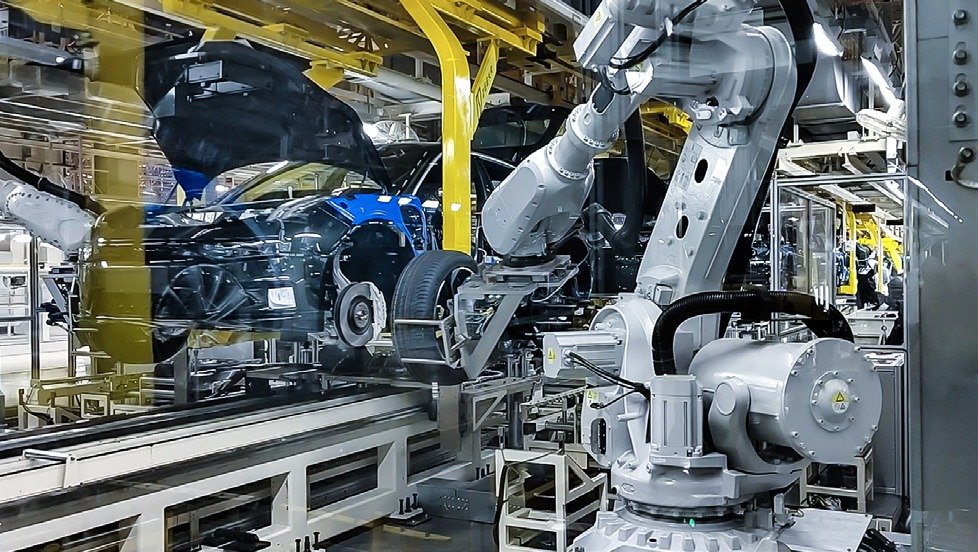
    The automotive sector pioneered advanced industrial automation applications decades ago. Robotization on assembly lines is used to coordinate several hundred operations at a millimeter accuracy. The PLC factory automation system deals with body welding, painting and final assembly. Quality control systems examine components by machine vision technology. This automation is what makes the modern vehicles to be as complex as they need to be.

    The flexible manufacturing systems permit the usage of several vehicle models on assembly lines. Rapid changeover strategies will reduce the time needed to change production models. JIT production depends on minute automation time and synchronization. The car business has been tirelessly advancing the limits of automation. Such inventions were later transferred to other manufacturing industries.

    Food and Beverage Processing

    Industrial automation applications ensure food safety and quality throughout processing operations. The automated systems ensure the maintenance of the proper temperature and sanitation at all times. Tracking Systems Traceability systems monitor the ingredients once received until distribution of the final product. This recording meets the requirements of high regulatory compliance effectively. Automation will decrease the chances of contamination that is prone to occur during manual processing.

    Packaging automation achieves speeds impossible with manual labor alone. Vision systems verify product quality and label accuracy before shipment. Batch recipe management ensures consistent product formulation across production runs. Clean-in-place systems automate equipment sanitization between production batches. These capabilities enable high-volume production maintaining quality standards.

    Pharmaceutical Manufacturing Precision

    Pharmaceutical manufacturing requires the best standards of accuracy and recording. Machinery and industrial automation systems ensure exact ingredient measurements consistently. Environmental controls ensure sterility in the manufacturing processes. Electronic batch records provide records of each process parameter as it happens automatically. This documentation meets all the FDA validation requirements.

    Serialization and track-and-trace systems fight pirated drugs on the world. Automated visual inspection identifies defective products before distribution. Cleanroom automation minimizes human intervention reducing contamination risks substantially. These stringent requirements drive continuous automation innovation. Such strict conditions are the driving forces behind the ongoing automation innovation. The pharmaceutical industry is the embodiment of the state of automation technology.

    Industrial Automation Applications Benefits and Return on Investment

    1. Operational Efficiency Gains

    Implementing industrial automation applications delivers immediate productivity improvements. Automated services take place 24 hours round the clock with no fatigue. These systems elevate production rates while maintaining consistent quality. Accurate control of manufacturing processes minimizes material waste. This increased efficiency directly increases profitability.

    Savings in labour costs come by automating repetitive and hazardous jobs. The remaining human resource performs more valuable tasks that require human judgment. Intuitive interfaces carry out complex manual operations, reducing training requirements. Automated production settings enhance overall equipment effectiveness. The business rationale of automation increases on a regular basis.

    2. Quality and Consistency Improvements

    Automated quality control systems inspect products much more effectively than manual methods. Statistical process control identifies changes that operators must correct promptly. Accurate process control substantially enhances product uniformity. High defect-reduction rates drive customer satisfaction. Furthermore, reliable quality delivery enables customer service to build a strong brand reputation.

    Plant automation software enables real-time quality monitoring across entire operations. Unspecified processes immediately alert the operators, prompting root cause analysis tools to detect quality problems at a rapid pace. Operators implement corrective actions faster, preventing the continuity of faulty production. These work capabilities make quality management differ.

    3. Scalability and Future-Proofing

    The industrial automation PLC systems of the present generation are expanded in line with business growth in an efficient manner. The extra capacity of production goes hand in hand with current infrastructure. Unified platforms guarantee availability and support of components in the long run. System extensions through software updates do not necessarily require replacement of hardware. This is flexibility in the long-term of automation investment.

    New technologies can be integrated using existing automation systems at the standard interface. Internet of things sensors result in economic benefits in terms of collecting data. Learning is a constant process within artificial intelligence algorithms to enhance the performance of the system. Embracing automation within organizations makes them competent in the future. The development of technology keeps gathering pace.

    Industrial Automation Applications Implementation Best Practices

    Strategic Planning and Assessment

    Successful industrial automation applications projects begin with comprehensive needs assessment. This involves analyzing the existing processes to identify areas that need improvements. In this phase, stakeholder involvement is crucial to ensure that automation solutions are going to solve actual operational challenges. The calculations of the returns on investment have proven the expenditure of a project to the management.

    Choosing technology takes into account the long term supportability and integration needs. Vendor relationships provide availability of experience and continuous assistance. Meanwhile, the use of phased implementation strategies reduce disruption of operations in the deployment. These are planning activities that define ultimate project success strongly. Implementation should be initiated in a rushed manner, but with the wrong planning, it becomes very expensive.

    Training and Change Management

    Workforce training ensures successful machinery and industrial automation system adoption. Before going live with new systems, the operators need to get experience with the new system. Automated equipment troubleshooting requires special training to the maintenance personnel. The management needs to be familiar with the capabilities of the system to be used well. The intensive training packages ensure full utilization of automation investments.

    The processes of change management facilitate the substitution of the workforce with the automated operations. The issue of job security and role change is handled by the means of communication. The early successes are celebrated to continue the initiatives of improvement. The process of cultural change is time-consuming, but it provides long-term organizational returns. Investment in people is the same as investing in technological significance.

    Conclusion

    Industrial automation applications represent essential competitive requirements for modern manufacturing operations. The integration of PLC factory automation, plant automation software, and advanced control systems transforms production capabilities fundamentally. Those organizations who practice such technologies have better efficiency, quality, and profitability in the long run. Automation process needs strategic planning, appropriate execution, and continuous optimization.

    As East Africa’s leading electrical engineering company with 75 years regional experience, we deliver comprehensive industrial automation applications across Kenya, Uganda, and Tanzania. We also specialise in intelligent motor control centres, variable frequency drive, as well as fully automated solutions to suit your needs. Collaborate with established automation experts who can be of great help to you in the business industry. Contact us today to discuss how our industrial automation solutions can transform your manufacturing operations and drive sustainable competitive advantages.

  • Automation in the Manufacturing Industry to Transform Production Excellence

    Automation in the Manufacturing Industry to Transform Production Excellence

    The landscape of modern production has fundamentally shifted as automation in the manufacturing industry continues to reshape how facilities operate across East Africa. With the industrial belt of Nairobi and the manufacturing belts of Kampala, companies are enjoying advanced technologies, which have boosted their productivity at a competitive advantage. The knowledge of these systems would be vital to the professionals in the industry aiming at streamlining their operations to attain increasing consumer needs in the market.

    The integration of automated manufacturing process technologies has moved from optional upgrades to essential infrastructure that determines market viability. Companies that embrace these advances position themselves at the forefront of industrial evolution, while those hesitant risk falling behind competitors who understand that automation in the manufacturing industry drives sustainable growth.

    automation in the manufacturing industry

    Understanding Modern Manufacturing Automation

    Automation in the manufacturing industry encompasses far more than simple mechanization. The current systems also incorporate the use of programmable logic controllers, human interface and advanced sensors, which are communicated in real-time. These elements combine to form smart production places wherein machines can make their decisions by using the set parameters. In this case, the technology has also developed so much as compared to rudimentary assembly lines and has advanced to sophisticated ecosystems that are self-governing and adaptive. Engineers now design automated production system architectures that predict maintenance needs before failures occur, dramatically reducing costly downtime. Managing production, the managers are able to see a lot further into all the facets of their company, not to mention the quality measures and the use of raw materials. Such an all-encompassing strategy turns around conventional manufacturing and makes it dynamic, responsive, changing in response to the situations in real time.

    Core Components of Automated Production Systems

    Industrial facilities rely on several interconnected technologies that form the backbone of modern automation in the manufacturing industry. Variable frequency drives can regulate the speed of motors on demand and thereby lower the amount of energy used at the same time prolonging equipment life.

    Intelligent motor control centers are able to manage several machineries at a time to coordinate their tasks in the most effective manner. The programmable automation controllers interpret thousands of inputs every second, and this is where the human operators would be overwhelmed by complex logic which is automated. These systems are closely linked to the supervisory control and data acquisition systems which give real-time visualization of complete production lines.

    Safety systems built into automated production system designs protect personnel while maintaining operational continuity. Redundant communication relationships warrant that try out messages get to their objectives even amid interruption of the prime routes. These components are sophisticated enough to indicate how decades of refinement in engineering could be done in terms of reliability and performance.

    Intelligent Motor Control Systems

    Motor control is also an important factor in the applications of process automation in industries where the greatest emphasis is placed on precision. Intelligent motor control centers have miniature protection, monitoring and communication features that are integrated in compact platforms nowadays. These are systems which observe the parameters of the motor at all times, and identify anomalies which indicate emerging issues. Variable frequency drive regulates the speed of the motor according to the demand of loads in a manner that is energy saving by a long margin.

    Soft-start capabilities eliminate mechanical stress during equipment startup, extending motor life expectancy. Communication protocols enable these controllers to share data with plant-wide systems, creating comprehensive operational awareness. Engineers configure these systems to respond automatically to changing conditions, eliminating the need for constant manual intervention. The result is smoother operation, lower maintenance costs, and improved energy efficiency across manufacturing facilities.

    Power Quality and Distribution

    Stable electrical supply forms the foundation of reliable automation in the manufacturing industry operations. What makes power quality a problem is the interruption of sensitive electronic controls, which will lead the production to halt and possibly damage the equipment. In how modern facilities fit active harmonic filters to clean the available electrical supplies to avoid voltage distortions in automation equipment.

    Uninterruptible power systems provide seamless backup during utility interruptions, ensuring critical processes continue without disruption. Intelligent switchgear monitors electrical parameters constantly, disconnecting circuits automatically when faults occur. Power factor correction equipment optimizes electrical efficiency, reducing utility costs while improving system capacity.

    Distribution transformers sized appropriately for automated loads prevent voltage drops that could affect controller performance. These power infrastructure elements work silently behind the scenes, enabling automation systems to function reliably day after day.

    Factory Automation Applications Across Industries

    The factory automation of applications within the various industries is executed in the way the industries demand them. Automated systems are in use in food processing plants to keep the recipes under strict control that allows a consistent appearance of the products as well as maintaining high requirements of hygiene.

    Pharma manufacturers use automation to ensure a perfect environmental climate and record all production processes to comply with the laws. The textile activities have combined automated handling of materials with the production machines and constant human participation is removed in the risky sections. The cement manufacturing industries depend on automated kilns which ensure they operate at the best temperatures and they are also fuel efficient.

    Food and beverage manufacturers employ advanced filling systems in which computers check the right amounts of beverages filled and the position of the cap on the bottle at a speed much higher than the capability of a human being. Each industry applies automation in the manufacturing industry principles differently, but all share common benefits of improved consistency, reduced waste, and enhanced worker safety.

    Process Control and Monitoring

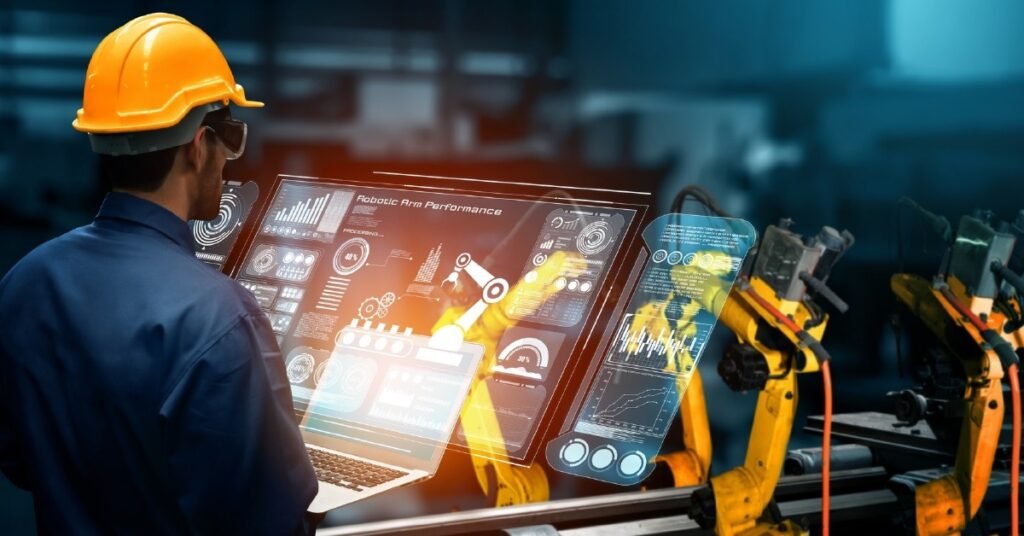
    Real-time process monitoring distinguishes modern automated manufacturing process implementations from earlier systems. There are sensors maintaining constant checking of temperature, pressure, flow, humidity, and many other factors on all production lines. These readings are compared to setpoints by control systems which make adjustments to instant conditions to ensure desired conditions are met.

    Data logging on historical data generates records in details about production, which leads to quality research and optimization of the processes. Alarm systems will alert the operators when the parameters in the system are no longer within acceptable limits and therefore, fast corrective measures can be taken.

    The trend analysis features assist the engineers in detecting slow changes that may be used to show the emerging issues. Remote monitoring enables experts to watch every operation remotely from any location and offer professional help without necessarily being there. This universal visibility alters the way facilities conceptualize and deal with their production processes.

    Quality Assurance Integration

    Process automation industry leaders recognize that quality control integrated into production processes prevents defects rather than merely detecting them. Vision systems inspect products at line speeds, identifying dimensional variations or surface defects invisible to human eyes. Automated testing equipment verifies functional performance on every unit, eliminating the sampling approaches traditional quality control required.

    Statistical process control algorithms analyze production data continuously, detecting trends that predict quality drift. Automated reject systems remove defective products from production lines instantly, preventing contamination of good inventory. Traceability systems record every production parameter associated with specific products, enabling rapid root-cause analysis when issues arise.

    Documentation generated automatically satisfies regulatory requirements without manual record-keeping. These quality systems transform manufacturing from reactive firefighting to proactive excellence.

    Benefits Driving Automation Adoption

    Organizations invest in automation in the manufacturing industry because measurable benefits justify initial expenses. When machines take up repetitive duties, labor productivity soars as the skilled laborers are now able to perform additional higher valuing duties. Automated systems eradicate human error in important processes, which has enhanced product consistency.

    The benefits of maintaining energy efficiency come because of the close control that is used to adjust the system operation to the actual demand. Waste minimization comes as a natural consequence when operations are performed with narrower tolerances. There is also an enhancement in safety records because automation will take out the workers in hazardous environments. The capacity is increased, without a corresponding increase in facilities, and the facilities are fully used.

    Data collection inherent in automated production system operation provides insights that drive continuous improvement initiatives. These practical positive gains from strong business arguments that defeat fighting against automation investment.

    Operational Excellence Through Automation

    Factory automation applications enable operational excellence that manual processes cannot match. Production scheduling becomes more flexible as automated systems switch between products quickly without extensive changeover time. Predictive maintenance based on actual equipment condition replaces scheduled maintenance, reducing unnecessary interventions while preventing unexpected failures.

    Energy management systems optimize utility consumption automatically, responding to tariff structures and production priorities. Inventory management integrates with production planning, minimizing working capital tied up in raw materials and finished goods.

    Real-time production metrics enable managers to make informed decisions rapidly, responding to changing market conditions effectively. These operational improvements compound over time, creating sustained competitive advantages that differentiate industry leaders from followers.

    Return on Investment Considerations

    Financial analysis of automation in the manufacturing industry projects must consider both tangible and intangible returns. Payback is probably most readily obtained in direct labor savings, especially in high-wage settings. The decrease in the cost of energy plays a great role particularly in the context where electricity is a large operating cost.

    With quality improvements, warranty claims, customer complaints, re-work costs are minimized. Expanding production capacity brings in more income using the facilities already in place without extension construction. Lower inventory carrying expenses generate free investment capital. The reduced cost through safety will also decrease insurance premiums and prevent expenditures on workplace accidents.

    Competitive positioning gets stronger with automation whereby they are able to do much more than competitors. Automation investments usually create returns that are much higher than the stated projections once evaluated in its totality.

    Implementation Strategies for Success

    Successful automated manufacturing process deployments require careful planning that addresses technical, organizational, and human factors. The preliminary analysis defines processes in which automation has the greatest value in comparison to the complexity of implementation. Roll out on a progressive basis enables organizations to build competence over time with minimal financial risks.

    Pilot projects introduce features developed and foster confidence prior to the implementation of scale. Change management programs train staff for new roles created by automation. Training programs ensure that staff understand how to operate and maintain new systems. Engineers must carefully analyze existing equipment to prevent the formation of closed automation islands.

    In terms of vendor selection, it does not only look at the capability of the equipment but also the ability to have long-term support. These implementation aspects either make automation projects successful or lead to failure.

    Technology Selection Criteria

    Choosing right technologies for process industry automation applications requires evaluating numerous factors. Scalability ensures systems can expand as production demands increase without requiring complete replacement.

    Open architecture designs eliminate vendor lock-in without hindering integration with a wide variety of equipment. Established high reliability in the same applications decreases the risk of deployment. Locally obtained support is very critical in cases where systems need maintenance or troubleshooting.

    During system lifespan, energy efficiency affects operating costs. The Cybersecurity functions prevent even more sophisticated threats to the operations. The design of the operator interface influences the rapidity of the adjustment of the personnel to new systems. The quality of documentation affects the effectiveness of maintenance in the long run. The above selection criteria are useful in making sure that investments in automation bring anticipated benefits.

    Integration with Legacy Systems

    Many facilities implement automation in the manufacturing industry while maintaining existing equipment that continues performing adequately. Current automation systems have communication interfaces that identify with older systems and establish integrated control frameworks.

    Data historians gather data on new and outdated equipment, which offers full operation insight. Procedural migration plans are used to substitute the aging systems with less disruptive wholesale changes upon expiry of their life. During such changeovers, engineering skills in current and old technologies will be useful. Procedures in testing ensure that systems in use are interoperable and interface properly before a production deployment.

    Backup systems guarantee that the operations will not be stopped in case there are integrity problems. It is a pragmatic strategy, which maximizes the revenue on current assets and takes into account the advantages of automation.

    The evolution of automated production system technologies continues accelerating as new capabilities emerge. The use of artificial intelligence allows machine learning by experience to optimise performance continuously without the need to change programs. The connection of the Industrial Internet of Things generates immense sensor networks that offer operational understanding never before achieved.

    Cloud computing services centralize data analysis, providing complex capabilities to both large and small facilities. Digital twin technologies model production processes, allowing engineers to optimize operations and test changes virtually before implementing them physically.

    Collaborative robots are safe and operate side by side with their human operators in a way that incorporates automation accuracy with human judgment. AR systems help maintenance staff to follow complicated instructions in order to minimize downtime. These emerging technologies promise to make automation in the manufacturing industry even more powerful and accessible.

    Conclusion

    Automation in the manufacturing industry has transformed from luxury to necessity for East African manufacturers competing in global markets. Those companies that do adopt such technologies benefit enormously in terms of productivity, quality, efficiency, and safety. The overall gains are not limited to short term improvement in operation, but also long term strategy placement, which dictates whether the enterprise will survive. The awareness of the automation components, application and implementation plans is a way of making informed choices that will generate the best ROI on investment in automation. The rapid change in technologies results in the early adopters building capabilities that result in a long-term creating a competitive distance with competitors who are not moving fast.

    Almost 75 years old, IET has provided full solutions in electrical engineering in Kenya, Uganda, and Tanzania and established an outstanding reputation of complex projects and innovative solutions. Our competence in industrial automation applications leads us, smart motor control hubs, building management systems and power quality synergies make us your perfect supplier should you want to implement manufacturing automation programs. We are aware of the peculiarities of the East African manufacturers and offer specially designed solutions, which could provide large-scale outcomes. Contact IET today to discuss how our proven automation expertise can transform your manufacturing operations and position your facility for sustained competitive advantage.