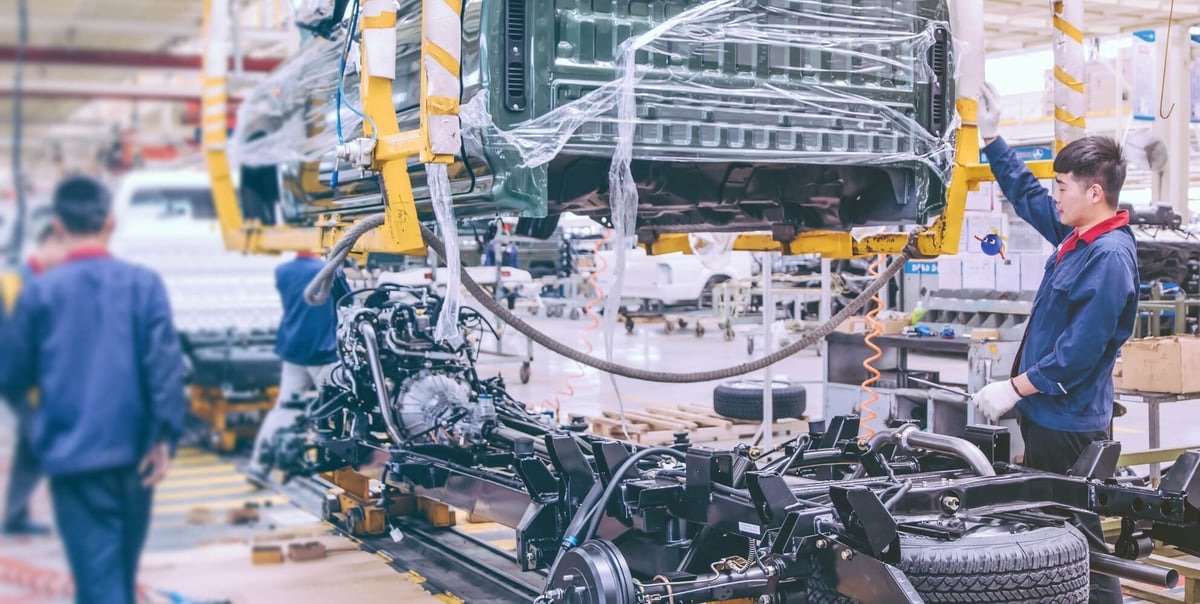
The current production requires accuracy, speed, and reliability. Industrial process automation delivers all three while reducing operational costs. Business organizations in the East African region is currently using such technologies to compete. The transformation begins with understanding what automation systems can achieve. Later on, the businesses open up to new productivity and quality measures.
Industrial process automation represents the integration of technology into manufacturing operations. It automates manual procedures with smart self-regulating systems. The systems are constantly monitoring, controlling and optimizing production. Further, they garner useful information to use in further enhancements. The outcome is smooth operations that are always able to achieve high production requirements.
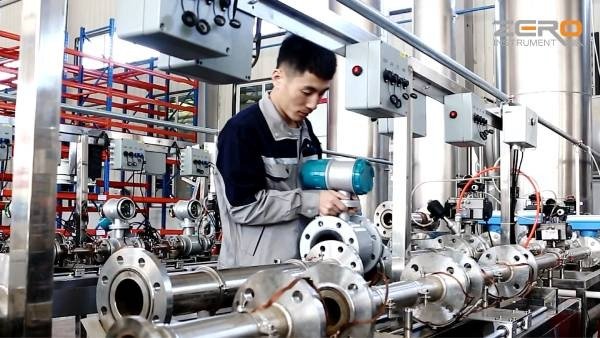
Understanding Industrial Process Automation Fundamentals
Core Components of Automation Systems
Automation systems comprise several interconnected elements working in harmony. PLCs also play the role of the working brain. They execute computerized commands in micro seconds. In the meantime, sensors obtain real-time information on all processes. This information is channeled to control systems to be analyzed.
Human Machine Interfaces (HMIs) make available easy-to-use control panels to the operators. These interfaces show real time critical process parameters. There is the ability to change settings, react to the alerts, and track performance. Moreover, the latest HMIs offer the opportunity of remote access. Having said that, supervisors will be able to monitor the affairs where they can receive the internet signal.
The Role of Industrial Process Control
Industrial process control ensures operations run within specified parameters. Control systems manage variables to achieve optimum conditions, maintaining temperature, pressure, flow rates, and chemical compositions with high precision. Therefore, there is a uniformity of product quality in all production batches. Such uniformity eradicates expensive deviations, wastage of resources is greatly curtailed.
Advanced industrial process control systems employ sophisticated algorithms. These algorithms allow predicting the possible problems before it gets into serious troubles. They examine the preference of the past to optimize the future performance. Moreover, predictive maintenance will eliminate problematic failures. The systems do not have emergency shutdowns but planned maintenance that is carried out during a planned downtime.
Benefits of Implementing Industrial Automation Solutions
1. Enhanced Operational Efficiency
Industrial automation solutions dramatically improve production throughput. Computer software works twenty four hours without rest or distraction. They are also accurate and fast throughout the night. In addition, the cycle times are reduced and the level of output is enhanced. The manufacturers are capable of satisfying an increasing demand without commensurate increase in costs.
Energy consumption decreases substantially with properly implemented automation systems. Smart controls will maximize power consumption depending on actual needs. Motors, pumps and compressors are only turned on when the need arises. There are also energy watching systems that establish areas where there are inefficiencies so as to constantly improve on them. Such savings have a direct influence on bottom-line profitability in the long run.
2. Improved Quality and Consistency
Industrial process automation eliminates human error from critical operations. Automated systems will execute programmed specifications to the latter. They do not feel distractions, fatigue, or lack of judgment. As a result, the defect rates decline to zero at the expense of an increasing product consistency. High quality products that are reasonably consistent are offered to the customers.
The inspection processes are more automated and thus more rigorous to quality control. The vision systems detect defects that do not have any visibility to the human inspection. Measurement systems check the dimensions to the micron level. Moreover, industrial automation and control systems make automatic records on all measurements. This is a comprehensive trail of data that supports quality certifications and regulatory compliance.
3. Enhanced Safety and Risk Reduction
Industrial automation solutions remove workers from hazardous environments. The work of robots involves the work with hazardous substances and in inhospitable conditions. Robotic systems are used to carry out work in small dimensions or poisonous environments. Thus, injuries in the workplace will be reduced and safety of the employees is enhanced. Businesses save the exposure to liability, as well as, insurance expenses.
Safety systems integrate seamlessly with industrial process control platforms. The emergency shut down procedures are automatic based on the sensors that sense anomalies. Interlocks ensure that there are no unsafe operations and safeguard personnel and equipment. In addition, extensive alarm systems inform the operators of emerging circumstances. The turnaround time is reduced significantly as opposed to manual systems of monitoring.
Advanced Technologies Driving Industrial Process Automation
Internet of Things Integration
IoT connectivity transforms traditional automation systems into intelligent networks. Sensors are constantly acting with cloud based analytics. Information moves out of the production levels to executive dashboard in real time. The stakeholders then provide real-time performance metrics, as well, at any location. This interrelatedness allows making more informed decisions faster between organizations.
Edge computing involves the introduction of processing power to the production devices. Data are analyzed locally with time-sensitive decisions made by local controllers. Critical processes are instant responses to the changing conditions. Besides, the bandwidth needs reduce due to less data flowing into and out of the individual. This architecture is particularly useful in places that have a poor connection.
Artificial Intelligence and Machine Learning
AI enhances industrial process automation through adaptive learning capabilities. Machine learning identifies trends that a human being would have overlooked. They keep on optimizing parameters of a process so as to achieve maximum efficiency. Moreover, predictive models are used to predict malfunctions of equipment even before they occur. Proactive not reactive maintenance teams tackle their problems.
Digital twins are digital representations of real-life production systems. The changes in simulation are tested by the engineers and then they are implemented physically. This strategy shortens down interruption in production and risks are minimized. In addition, digital twins provide the possibility of capacity planning through a what-if scenario. The operations divisions are comfortable with scaling the production to changing demand levels.
Cybersecurity in Industrial Environments
Modern industrial automation solutions require robust cybersecurity measures. Malware and unauthorized access is a threat to connected systems. Critical infrastructure is secured by multi-layered security protocols. Sensitive data is secured with the help of firewalls, encryption, and authentication. Periodic security audits are used to remove possible vulnerabilities in advance.
Network segmentation isolates industrial process control systems from office networks. This isolation ensures that there are no cross environmental transfers of cyber threats. The air-gapped systems also offer the eventual security of critical processes. The security policies provide a reasonable level of access and security. However, organizations remain operational and in defense against threats as they change.
Industrial Process Automation Implementation Strategies for Maximum ROI
Assessment and Planning Phase
Successful industrial automation and control projects begin with comprehensive assessments. Engineers evaluate existing processes to identify automation opportunities. They document current performance metrics and improvement objectives. Subsequently, detailed specifications guide technology selection and integration planning. Clear goals ensure projects deliver measurable business value.
Return on investment calculations justify automation investments to stakeholders. Analysis includes equipment costs, installation expenses, and training requirements. Benefits quantify productivity gains, quality improvements, and cost reductions. Moreover, payback periods typically range from two to five years. Most organizations realize benefits far exceeding initial investment costs.
System Integration and Commissioning
Industrial process automation requires careful integration with existing infrastructure. Older devices usually have connections via contemporary communication standards. The system integrators guarantee the smoother data transfer between the old and the new. The protocols of testing are used to confirm functionality prior to the production deployment. Thus there are smooth transitions that do not disrupt much on operational activities.
Commissioning validates that automation systems meet design specifications precisely. There is a lot of testing performed by engineers under different operating conditions. They check safety systems, alarm features and emergency operations. In addition, operators are fully trained on new systems. Transfer of knowledge will ensure that staffs are able to sustain and make better use of automated processes.
Continuous Improvement and Optimization
Industrial automation solutions deliver ongoing benefits through continuous optimization. Opportunities to make further efficiency improvements are detected by analytics platforms. Control algorithms are narrowed or widened by engineers depending on experience. Besides, software updates increase the capabilities without hardware updates. Systems change with the requirements in business and change of technologies.
Performance monitoring ensures industrial process control systems maintain peak efficiency. The major performance measurements are monitoring productivity, quality, and equipment efficiency. Dashboards represent the trends graphically and pinpoint locations that need action. The management then takes the data-driven decisions regarding where to allocate resources. The outcome is the competitive advantage that is long-term due to the operational excellence.
Industry Applications and Use Cases
Manufacturing and Process Industries
Chemical processing plants rely heavily on industrial process automation. Refined control ensures the best reaction condition to ensure uniform output. The allocation of batch processes is automatic and based on confirmed recipes. In addition, the measurement of quality takes place in between production cycles. These features provide regulatory and product safety.
Food and beverage manufacturers implement automation systems for hygiene and consistency. Between manufacturing batches, automated cleaning ofses ensure a clean environment. Recipe management is used to guarantee consistency of flavor profiles across batches. Also, traceability systems facilitate tracking of ingredients by receiving finished products. Such visibility promotes quality issues response rapidly.
Energy and Utilities Sector
Power generation facilities depend on sophisticated industrial process control systems. These systems stabilize the supply with the changing demand on a real-time basis. This is because they maximize fuel usage and minimize emission levels at all times. Besides, automated switchovers keep the service in case of equipment maintenance. There is increased reliability and the operational costs reduced.
Water treatment plants utilize industrial automation solutions for public health protection. The purification processes are at the multi-stage purifications with strict regulatory controls. Automated testing equips the water with quality that is above acceptable standards. Thereafter, distribution systems sustain suitable pressure within networks. The citizens get safe and sure supplies of water 24 hours.
Mining and Resource Extraction
Mining operations implement industrial automation and control for safety and efficiency. The automated drilling and explosives maximise extracting resources. Materials do not require much human intervention since they are moved through conveyor networks. Moreover, refining, sorting, and crushing of materials occur through mechanical means of processing plants. Such abilities ensure that one is not exposed to dangerous situations.
The remote operations centers would control the various locations based on centralized points. The operators control the equipment over a long distance with the use of video and telemetry. Self-driving cars deliver materials without human drivers. Also, predictive analytics will maximize the extraction rates, and it extends the life of equipments. The sector is still moving towards complete autonomy.
Conclusion
Industrial process automation fundamentally transforms how manufacturers operate and compete. State of the art automation systems provide quantifiable enhancements in efficiency, quality and safety. The companies that adopt them get great competitive advantages. In addition, the ongoing innovation also makes sure that it generates benefits that are compounded over time. The future is of those companies that can leverage automation thus.
For over 75 years, IET has delivered world-class industrial automation solutions across East Africa. We work with East African countries delivering world class solutions to help companies get the most from these systems. Our services include design, installation, commissioning and support. Transform your operations with industrial process automation that drives real results. Contact IET today to discuss how our industrial automation and control expertise can elevate your business to new heights of operational excellence.
Leave a Reply