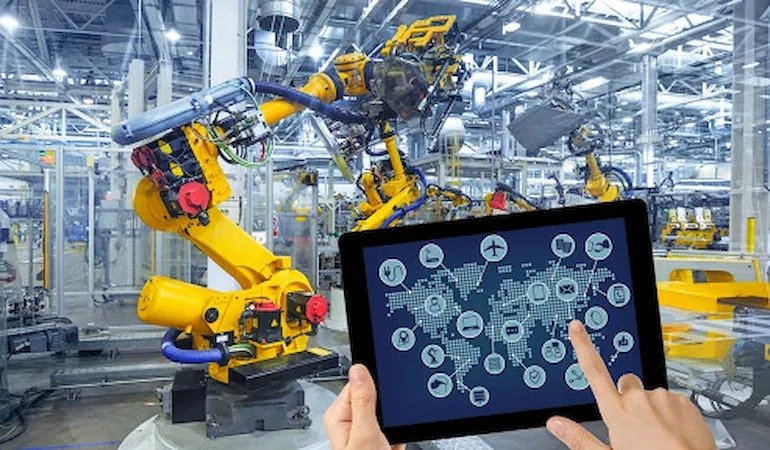
The manufacturing environment has radically changed in the last few decades. Automation in industrial facilities represents far more than just installing new equipment. It radically transforms the operational processes, competitiveness and value delivery. Understanding what industrial automation involves recognizing the integration of control systems, information technologies, and electromechanical devices. All these factors combine to minimize human input and maximize productivity. The change needs to be carefully planned and strategized. The trick is to ensure that you know the needs of your facility when deciding on success.
Modern industrial automation technology encompasses programmable logic controllers, distributed control systems, and supervisory control systems. The technologies allow the manufacturing processes to be controlled well. They also have real-time data that can be used in making informed decision-making. Moreover, automating provides a chance to predictive maintenance and improve quality. The application of automation in industries continues expanding across sectors. Smart technologies spur productivity in the food processing industry to the automotive industry.

Automation in Industrial: Assessing Your Facility’s Automation Readiness
The initial step that should be taken before any automation solution is put into place is to do a facility assessment. Begin by assessing what you are currently doing and locating the bottlenecks. Record in which human intervention is resulting in delays or quality problems. Such a baseline perception is essential in gauging success in future. Also, examine the ability of your infrastructure to handle new systems. All these include power supply, network connectivity and physical space which are all part of planning.
Your labor availability is as important as infrastructural availability. sorts out the training programs required in your team to work with new systems. Critically evaluate the possibility of managing high-level automation by current employees or addressing the need of outsourcing skills. The budget constraints should be realistic and should cover both the capital and operational costs. The application of automation in industries requires significant upfront investment. Nevertheless, the long-term advantages of changes usually pay in the first costs in terms of efficiency and decreased labor rates.
Step 1: Conduct a Comprehensive Process Audit
Start by mapping your entire production process. Determine the processes that take up the highest amount of time and resources. Search amongst usual duties that can be automated to perform more effectively. The automated inspection systems tend to serve quality control points well. Uniqueness in these systems is also consistent and cannot be compared with collecting information by hand.
Step 2: Evaluate Infrastructure Requirements
Automated equipment will require more power in your electric systems. There must be a sufficient bandwidth of the network infrastructure to transmit data. Physical layouts can be changed to fit in new machinery. The smart sensors produce data that needs storage systems. These factors eliminate the expensive retrofit actions once the project has started.
Step 3: Build Internal Capabilities
Technical employees need to be trained on novel automation platforms and protocols. Maintenance personnel must have expertise in troubleshooting complicated integrated systems. Operators need to be aware of the means of monitoring automated procedures. The management ought to know how to decode the automation information and use it to make strategic decisions. Making investment in people guarantees that technology gives desired returns.
Automation in Industrial: Developing a Strategic Implementation Roadmap
Creating a detailed implementation plan prevents common pitfalls in automation in industrial projects. Begin by setting measurable goals of your initiative to automate. These may involve a reduction in cycle time, excellence in product quality or energy reduction. Have realistic schedules to take into consideration the process of procurement, installations, and commissioning. Large projects can be divided into small steps in order to keep the momentum and show value.
Give priority to the processes requiring automation through possible impact. Quick wins create confidence in the organization towards the transformation process. Choose locations where automation can create short-term observable advantages to operations. This strategy will aid in receiving future backing and funding to later stages. In addition, stepwise introduction enables teams to gain and change over time.
Selecting the Right Technology Partners
Partner selection significantly impacts project success in industrial automation technology implementations. Appraise suppliers on experience and technical ability in the industry. Ask for related facilities/applications detailed case studies. Evaluate their after installation services and training services. All-purpose collaborations are important as compared to a single-time transaction in automation.
Establishing Clear Performance Metrics
Define key performance indicators before implementation begins for accurate measurement. Track both technical metrics like uptime and business metrics like ROI. Establish baseline measurements for comparison after automation deployment. Create dashboards that make performance visible to all stakeholders. Regular monitoring enables quick identification of issues requiring attention.
Automation in Industrial: Implementing Core Automation Technologies
The heart of automation in industrial facilities lies in selecting appropriate control systems. Programmable Logic Controllers serve as the foundation for most manufacturing automation. They control individual machines or entire production lines with remarkable precision. Distributed Control Systems work well for continuous process industries like chemicals. Supervisory Control and Data Acquisition systems provide overarching monitoring and control capabilities.
Variable Frequency Drives represent another crucial component in modern automation. These devices control motor speed and torque with exceptional efficiency. They reduce energy consumption while extending equipment lifespan significantly. Industrial networks connect all these components into cohesive, communicating systems. Ethernet-based protocols increasingly dominate due to their flexibility and speed.
Integrating Sensors and Smart Devices
Automated systems have their eyes and ears supplied by modern sensors. There are continuous cursory monitors on temperature, pressure, flow, and level sensors. Super human inspection of products is done through vision systems. Smart transmitters make it possible to use more than basic measures to obtain diagnostic data. The information in this sensor is given to real-time decision-making control systems.
Deploying Motor Control Solutions
Intelligent Motor Control Centers simplify the power flow and control of the motor. They include security, administration, and monitoring of small sizes. Soft starters eliminate mechanical stress in the motor startup cycles. Regenerative drives optimize the energy released during the braking process that is used in facilities. These technologies are maximized in the use of energy throughout the manufacturing process.
Establishing Reliable Communication Networks
The industrial networks should be deterministic, secure and robust, to conduct reliable operations. Fiber optic backbones allow connection with the field devices at a high speed which entrance is provided by the control rooms. The wireless solutions are flexible when installing in demanding environments. Redundant structures provide the system to keep on running even when network components fail. Correct network design will help in avoiding bottlenecks in communication which will limit the functions of the system.
Automation in Industrial: Optimizing Safety Through Automation Standards
Safety must remain paramount throughout any automation in industrial implementation. The current safety systems are not simply the emergency stops and guards. PLCs and networks with the safety rating allow advanced protection, still being productive. Without disrupting the working process, light curtains, safety mats, and laser scanners ensure safety of workers. These technologies enable man and machine to work in closer proximity without any harm.
System design is guided by the use of functional safety standards such as IEC 61508 and 61511. Adhering to these criteria will guarantee that automation makes things safer, not jeopardizes the safety of workers. The risk evaluation provides point of view of the possible hazards before they lead to accidents. Components that are rated as to safety are subject to intense testing and certification. Safety system documentation is vital in reducing compliance with the regulations and audits.
Implementing Lockout-Tagout Procedures
Maintained automated systems must undergo stringent energy isolation processes. The electronic lockout systems monitor the persons who can work on the equipment. Access control facilitates integration to ensure that only qualified people access hazardous areas. Lockout procedures can be implemented by use of software controls adopted by automated systems. Such measures inhibit accidents in the routine maintenance in operation.
Creating Safety Zones
Physical barriers separate automated equipment from human workers where appropriate. Collaborative robot applications allow safe human-robot interaction within defined parameters. Area scanners detect human presence and adjust machine behavior accordingly. Emergency stops remain strategically placed for quick manual intervention when necessary. Layered safety approaches provide multiple levels of protection.
Managing Data for Operational Excellence
The application of automation in industries generates vast amounts of valuable data. Execution Systems Manufacturing This generation fills in the gap between the enterprise and shop floor systems. They monitor the production as it happens and offer insight into the operations. The process data is archived by historians to be utilized in trend analysis and to troubleshoot. The industrial data is being saved and process in cloud platforms in a large size.
Data analytics converts raw information to actionable insights to achieve continual improvement. Predictive analytics detects trends that are pointers of equipment breakdown, before it takes place. This can facilitate some proactive planned maintenance that reduces unscheduled maintenance. Energy management systems work automatically by taking data to maximise consumption patterns. QMS use data to speed up the identification of root causes of defects.
Implementing Cybersecurity Measures
Cyber challenges that threaten industrial networks are on the rise and need to be confronted with effective protection measures. Segmentation of networks isolates the key control systems within the enterprise networks. Intrusion detection systems and firewalls are used to watch out traffic. Periodic security audits remind the security auditors of the vulnerabilities before attackers can exploit the vulnerabilities. Maintaining cyber hygiene within the company is achieved through employee education.
Enabling Remote Monitoring
Remote access will be secure enabling professionals to troubleshoot systems remotely. Mobile applications make operators have real-time notifications and data. It allows remote process visualization and training due to the use of virtual reality devices. Nevertheless, remote access should be convenient and secure. Unauthorized access is prevented with the help of multi-factor authentication and encrypted connections.
Maintaining and Sustaining Automated Systems
Successful automation in industrial facilities requires ongoing maintenance and optimization. Develop a full maintenance program that deals with preventive and predictive measures. Frequent sensor calibration will guarantee an accuracy of measurements and control measures. Software updates deal with the security weaknesses and introduce new features in the long run. The inventory control of spare parts avoids prolonged stalling of components.
The training programs have to change according to the changes in employees and the technology. Cross-training will make sure that various individuals know the important systems and processes. Institutional knowledge exists in the documentation of system configuration and changes. The evaluation of performance shows possibilities of additional optimization and increased efficiency. Sustained automation investment benefits are produced by the continuous improvement mentality.
Conducting Regular System Audits
Periodic reviews assess whether systems meet original performance objectives consistently. Identify any degradation in performance requiring corrective action or upgrades. Evaluate whether changing business needs require system modifications or expansions. Benchmark performance against industry standards to identify improvement opportunities. These audits ensure automation continues delivering expected value over time.
Planning for Technology Refresh
Industrial machinery has a limited number of lifespan which necessitates replacement or upgrading after some time. Track the vendor roadmaps to predict the component and system obsolescence. Long-term planning budget to refresh technology on a periodical basis. When choosing new technologies to guard previous investments, put into consideration the backward compatibility. Little or nothing strategic planning avoids the imposition of costly emergency replacements.
Measuring Return on Investment
Quantifying benefits proves essential for justifying automation in industrial expenditures. Divide the tangible profits such as labor savings as well as the intangible one such as quality. Measure pre implementation and postimplementation to show actual changes made. Add in the decreased downtime, lowering of the energy expenses, and waste reduction. Offer current ROI to the stakeholders in simple straight forward formats.
A large number of plants have a payback period of between two and four years. Nonetheless, the payback may be extended well beyond the initial payback in terms of saved funds. Better uniformity and quality has added satisfaction to customers and reputation on the market. Automation allows the facilities to compete in the global markets progressively. The strategic value at times goes beyond the formal financial calculations of the value of the return on investment.
Conclusion
Implementing automation in industrial facilities represents a significant undertaking requiring careful planning. The key to success is in careful evaluation, selection of technology and gradual implementation strategies. Understanding industrial automation technology enables informed decisions throughout the implementation journey. The application of automation in industries continues evolving with advances in technology. In manufacturing, automation facilities will set themselves in the position of gaining a competitive advantage that is long lasting.
Having more than 75 years of experience in East Africa, we are aware of the issues of industrial automation implementation. We provide end-to-end solutions in design and commissioning as well as maintenance services. Our alliance with the companies has been with leading global manufacturers in order to supply advanced automation technologies. We are able to combine our local knowledge with global standards to make sure that your facility performs to the best. Contact us today to discuss how our industrial automation solutions can transform your operations.
Leave a Reply