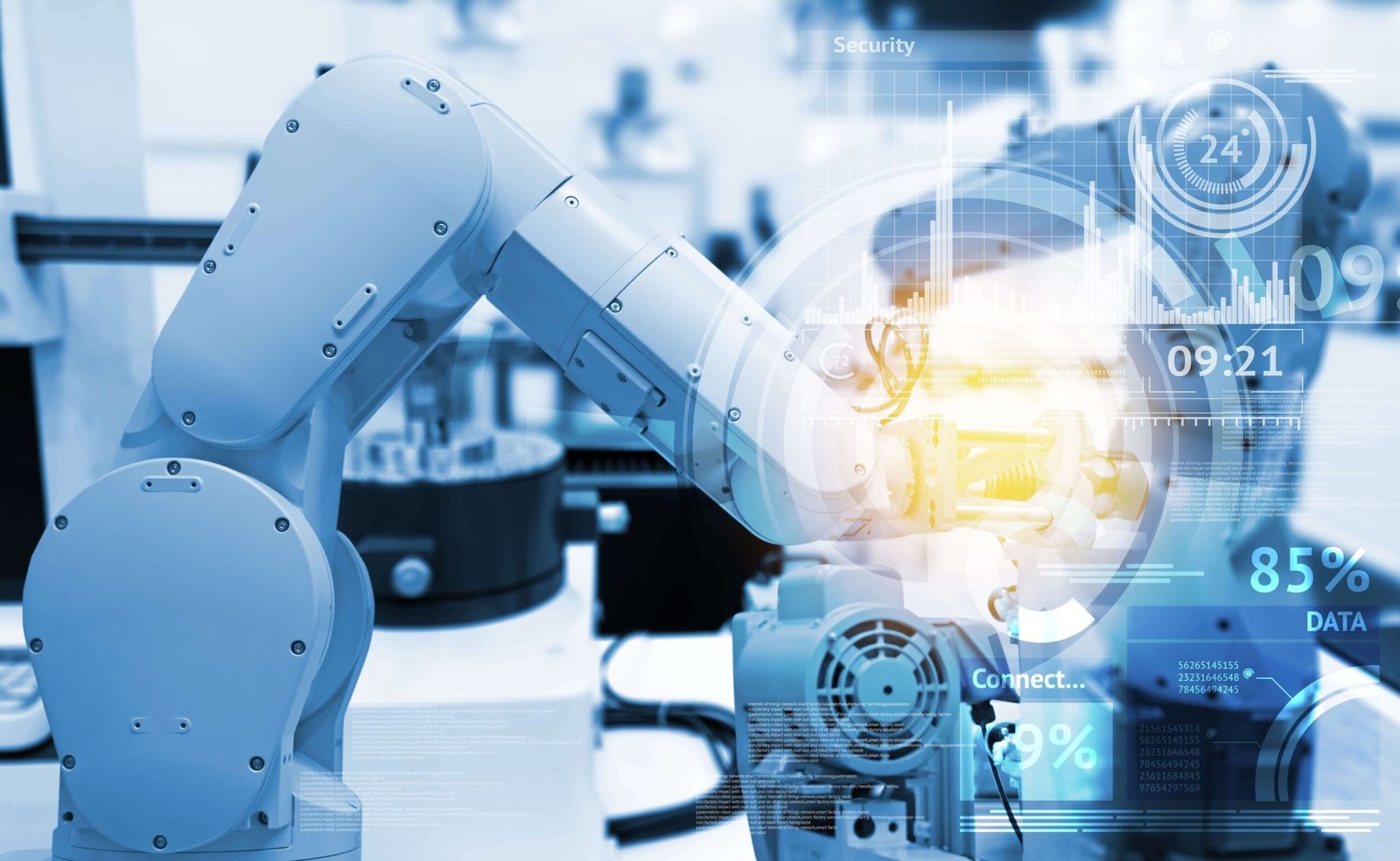
Manufacturing floors across East Africa are experiencing a fundamental shift as AI for industrial automation transforms traditional production environments into intelligent ecosystems. The use of artificial intelligence in industrial patterns is no longer a theoretical topic but rather a tangible need that companies in the current competitive markets need to attain as a way of gaining competitive advantages in the markets.
This is a technological development that uses a blend of machine learning, computer vision, and advanced analytics to develop a system that improves, evolves, and optimizes operations constantly. For seasoned professionals navigating this transformation, understanding how AI industrial automation reshapes operational paradigms proves essential for strategic decision-making and implementation success.
Understanding the Foundation of AI in Manufacturing Systems
AI for industrial automation represents the convergence of multiple technologies working together to enhance production capabilities. At its core, artificial intelligence empowers machines to recognize patterns, make decisions, and solve problems. Traditionally, these tasks previously required human intelligence.
Modern manufacturing facilities deploy AI industrial automation systems that process vast amounts of sensor data, identify anomalies, and execute corrective actions without human intervention. They analyze backward production data to determine optimal operating parameters and use neural networks, trained on prior data, to manipulate their processes.
The architecture of AI for industrial automation typically includes edge computing devices that process data locally, cloud-based analytics platforms that identify trends, and control systems that implement decisions. Machine learning algorithms also keep on improving their surfaces through continuous evaluation of their results and enhancement of predictive models. The sensors used in the Industrial Internet of Things (IIoT) supply data on the temperature, pressure, vibration, and other potential critical variables to AI systems and enable them to form a complete digital model of a physical process. Such a foundation allows manufacturers to shift to registering the reactive method of maintenance to a predictive method of maintenance and avoid failures before they can happen.
AI for industrial automation systems also incorporate natural language processing capabilities, allowing operators to interact with complex machinery using conversational interfaces. Computer vision products detect product defects at speeds human hands cannot achieve, even when those defects are measured in micrometers. Such technological building blocks assemble into automation solutions that fundamentally transform manufacturing operations, improving quality, efficiency, and safety.
Predictive Maintenance Revolution Through Machine Intelligence
Predictive maintenance stands as one of the most transformative applications of AI for industrial automation, fundamentally changing how organizations approach equipment reliability. Maintenance traditionally operated to a pre-determined schedule or on the occurrence of failure leading to unnecessary maintenance or an expensive and unplanned downtime. AI industrial automation systems analyze vibration patterns, thermal signatures, acoustic emissions, and power consumption data to predict component failures weeks or months in advance. This enables the maintenance teams to arrange interventions at locations with planned downtimes to achieve resource optimization and reduce discontinuities in production.
AI-based applications, such as machine learning models, detect hidden trends that indicate the imminent failures of equipment based on the years of data on actual equipment performance. The models identify the normal variations of the operations and actual warning signs, which minimizes false alarms, which characterized their predecessors. The future of industrial automation includes digital twins—virtual replicas of physical assets that simulate equipment behavior under various conditions, helping engineers understand failure mechanisms and optimize maintenance strategies. The manufacturers who have adopted such AI-based strategies claim that they have reduced unplanned downtime by significant margins and in some cases, their cost of maintenance has realized a thirty plus percent. saving.
The sophistication of predictive maintenance continues to advance as AI for industrial automation systems incorporate additional data sources. The information about the supply chain, weather forecasts, orders times, and behaviors of the operators are all making predictions more accurate. More sophisticated systems will even suggest the optimal level of inventories of spare parts based on the distribution of failure probability so that the essential parts are only available when required. This all-inclusive view of managing the assets turns maintenance into a strategic ability that has a direct influence on the production efficiency and profitability.
Quality Control Enhancement Through Computer Vision
AI-powered computer vision has revolutionized quality control processes across manufacturing sectors. Conventional inspection systems relied on manual methods that required workers to view products under various light levels—a process susceptible to fatigue, inconsistency, and low productivity. Modern AI industrial automation systems deploy high-resolution cameras and sophisticated image processing algorithms that inspect products at production line speeds, identifying defects invisible to the human eye. These systems identify the surface defects, dimensional differences, color and assembly faults with an incredible precision.
Deep learning networks trained on millions of images learn to distinguish between acceptable variations and genuine defects, adapting to different product types without extensive reprogramming. The flexibility of these AI for industrial automation systems allows manufacturers to implement quality control across diverse product lines without dedicated inspection equipment for each variant. Computer vision applications extend beyond visual inspection to include optical character recognition for verifying markings, 3D scanning for dimensional verification, and thermal imaging for detecting internal defects.
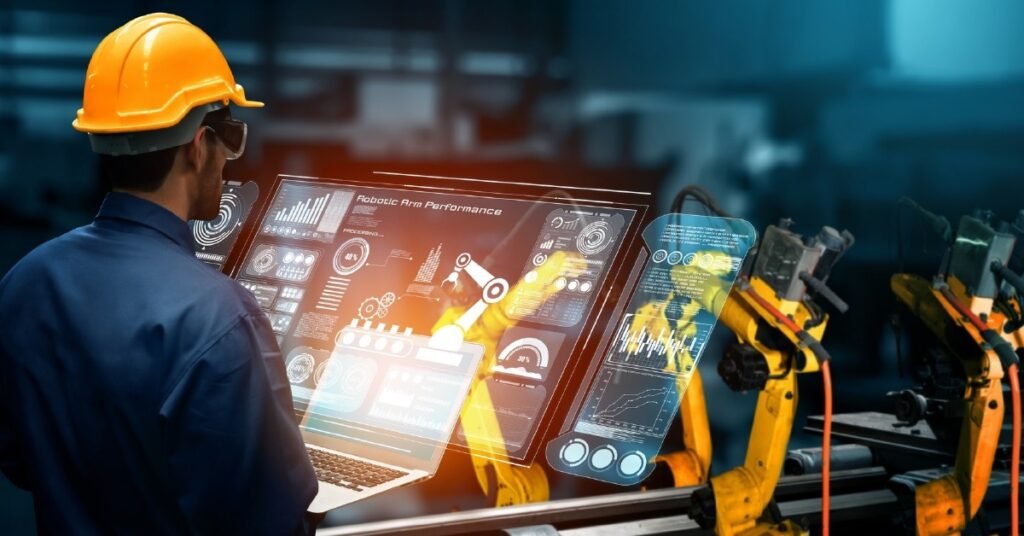
Integration of computer vision into AI for industrial automation frameworks enables real-time quality feedback loops that automatically adjust production parameters when drift occurs. Manufacturing execution systems receive instant notifications about quality trends, allowing engineers to address issues before defective products accumulate. Some advanced implementations use augmented reality to overlay quality data onto operator displays, providing immediate feedback about specific defects and their locations. This convergence of technologies represents a significant leap forward in manufacturing quality assurance capabilities.
Process Optimization Through Intelligent Analytics
AI for industrial automation excels at optimizing complex manufacturing processes with multiple interacting variables. Conventional optimization methods were also demanding in terms of experimentation and depended much on the experience of the operator to determine the best settings. Machine learning algorithms are used to identify operating points that will maximize efficiency or product quality, by analysing relationships between input parameters, the environmental conditions and the quality of outputs. These systems keep on varying parameters slightly trying the impacts and evaluating the outcomes and improving their interpretation of the process dynamics.
Reinforcement learning applications allow AI industrial automation systems to learn optimal control strategies through trial and error, similar to how humans acquire skills through practice. The algorithms are fed with feedbacks on the outcomes of the processes and change their decision process to achieve the desired results as much as they can to the safety limits. This method has been effective especially in processes where the relationship between the variables are nonlinear and complex as in a chemical reaction, thermal treatment and materials processing.
The future of industrial automation includes increasingly sophisticated optimization that considers multiple objectives simultaneously—energy consumption, production rate, product quality, and equipment wear. These competing priorities are balanced out by multi-objective optimization algorithms to meet the business priorities and automatically change based on the market conditions. Integration with enterprise resource planning systems allows AI for industrial automation platforms to optimize production schedules considering customer orders, raw material availability, and equipment capabilities, creating truly intelligent manufacturing operations.
Energy Management and Sustainability Applications
AI for industrial automation plays a crucial role in reducing industrial energy consumption and environmental impact. The factories use lots of electricity, pressurized air, steam and cooling water and the expense of energy takes up a large fraction of the operating funds. AI systems examine energy consumption trends in equipment and production periods and determine points of consumption that enable to reduce consumption without affecting the production goals. Such systems predict the energy demand in advance according to the production schedules, weather forecasts, and the prices of utilities, which maximize the time when energy consuming activities are made.
Machine learning models identify inefficient equipment operation by comparing current performance against historical baselines and theoretical optimal performance. AI industrial automation systems automatically adjust HVAC settings based on occupancy, production activities, and ambient conditions, maintaining comfortable working environments while minimizing energy waste. Compressed air systems—notorious energy consumers in manufacturing facilities—benefit particularly from AI optimization that eliminates leaks, reduces pressure levels, and matches compressor operation to demand patterns.
The future of industrial automation increasingly emphasizes sustainability metrics alongside traditional production measures. AI for industrial automation platforms track carbon footprints, water consumption, and waste generation, providing real-time visibility into environmental performance. These systems help facilities comply with increasingly stringent environmental regulations while identifying opportunities for resource recovery and circular economy implementations. Advanced applications even optimize supply chain logistics to minimize transportation-related emissions, demonstrating how AI’s impact extends beyond individual facilities.
Workforce Collaboration and Safety Enhancement
AI for industrial automation transforms how humans and machines collaborate on manufacturing floors, enhancing rather than replacing skilled workers. Despite the common fears, AI applications tend to produce demand on more specialized jobs aiming at monitoring systems, optimization, and learning. Augmented reality systems powered by AI industrial automation provide operators with real-time guidance, displaying assembly instructions, highlighting potential safety hazards, and offering troubleshooting recommendations. The tools can assist new employees to become proficient quicker and the experienced ones with these complex, infrequent tasks.
Safety improvements represent a significant benefit of AI for industrial automation implementations. The computer vision practices observe work places to detect safety breaches by workers entering restricted areas, workers who have not put on protective gears or workers who practice unsafe acts. The AI systems allow 24/7 upkeep of surveillance unlike human supervisors who are unable to check all the places at the same time with a sense of exhaustion or distraction. These systems notify supervisors immediately when the hazardous conditions arise and in this situation, automatically stop the equipment in order to avoid injuries.
Collaborative robots, or cobots, equipped with AI for industrial automation capabilities work alongside human operators, handling physically demanding or repetitive tasks. These robots have sophisticated sensors and artificial intelligence algorithms that can identify the presence of human beings, and manipulate their poses in a way that they do not collide with humans, thus providing safe human-robot working with minimal safety protection. The future of industrial automation envisions increasingly sophisticated human-machine partnerships where AI handles routine decisions and calculations while humans focus on creative problem-solving, strategic thinking, and situations requiring empathy and judgment.
Supply Chain Integration and Demand Forecasting
AI for industrial automation extends beyond factory walls to optimize entire supply chains, creating responsive manufacturing networks. The use of demand forecasting algorithms predicts the future demand of a product by using past sales records, market positioning, social network feedback, weather, among economic indicators with incredible accuracy. These forecasts enable wholesalers to rearrange the production plans in advance and this helps to reduce the costs of carrying inventory and the level of service is not compromised. With the help of machine learning models, it is optimally only after a certain time that they update their forecasts with the actual demand and become more precise.
Integration of AI industrial automation with supplier systems creates intelligent procurement processes that optimize ordering timing and quantities. Algorithms consider lead times, price fluctuations, minimum order quantities, and production schedules to minimize total supply chain costs. Some advanced implementations use reinforcement learning to negotiate optimal pricing and terms with suppliers, considering multiple factors beyond unit cost. Quality data from supplier deliveries feeds back into procurement decisions, gradually shifting orders toward higher-performing suppliers.
The future of industrial automation includes end-to-end supply chain visibility powered by AI analytics. Manufacturers operate in real-time tracking of the materials raw to finished product and discovering the bottlenecks in logistics to optimize the logistics process. When disruptions occur—supplier delays, transportation issues, quality problems—AI for industrial automation systems automatically evaluate alternatives and recommend contingency actions. This is the degree of supply chain intelligence that enables the manufacturers to ensure continuity in production even though global markets are becoming more complex and uncertain.
Implementation Challenges and Strategic Considerations
Successful AI for industrial automation implementation requires careful planning and realistic expectations about deployment timelines and results. Motivated by the premise underlying machine learning, organizations tend to underrate the significance of data quality and availability and only to find that historical records are not consistent and complete. The equipment in use before might not include sensors needed in data collection, thus retrofits or upgrades are needed. The networks should be capable of handling larger amounts of data and offer a solid connection throughout between edge equipment, control systems as well as cloud analytics solutions.
Cultural resistance represents another significant challenge in AI industrial automation deployments. People with long-term experience in the field of operation and engineers are reluctant to accept AI suggestions, especially when this recommendation is contrary to what has been adopted. When these stakeholders are engaged early, AI can be tested successfully with pilot projects and the trust built over time. Training programs can make personnel realize what AI is capable and what it cannot achieve, building a realistic understanding of what AI can do. Organizations must also address workforce concerns about job security, clearly communicating how AI for industrial automation enhances rather than eliminates human contributions.
The future of industrial automation depends on addressing cybersecurity concerns that intensify as manufacturing systems become more connected. AI for industrial automation platforms create additional attack surfaces that malicious actors might exploit to disrupt operations or steal intellectual property. Proper security designs, frequent vulnerability scanning, and incident response models can also be considered as important constituents of any AI rollout plan. The issue concerns organizations striking a balance between the benefits of connectivity and risks of security in order to provide the necessary security measures without losing the system integration that is the prerequisite to the effectiveness of AI.
Regional Opportunities in East African Manufacturing
East African manufacturers face unique opportunities and challenges in adopting AI for industrial automation technologies. The region’s growing industrial base, increasingly skilled workforce, and improving digital infrastructure create favorable conditions for AI implementations. Industries such as food processing, textiles, pharmaceuticals, and beverage production stand to gain substantial benefits from predictive maintenance, quality control, and process optimization. Power sector challenges that historically constrained manufacturing growth actually create opportunities for AI-powered energy management systems that optimize operations despite unreliable grid power.
Infrastructure development across Kenya, Uganda, and Tanzania continues improving data connectivity essential for AI industrial automation deployments. The growth of mobile networks has connected the industrial areas that have never had access to high-speed internet so that cloud-based analytics and remote monitoring can be performed. The strategic value of AI is becoming more widely accepted by local governments which instigate policies and programs that promote the use of the new technology. Educational institutions expand engineering and data science programs, developing the technical talent necessary to support AI for industrial automation implementations.
The future of industrial automation in East Africa includes collaborative networks where manufacturers share insights and best practices about AI deployments. Regional automation centers also offer training and demonstration sites as well as consultations, which assist smaller manufacturers in getting AI-engineered services typically accessible to multinational firms. Since successful implementations have proven beneficial results, bringing tangible benefits, such as reduced downtime, better quality, energy savings, adoption is increasing throughout the manufacturing industry. Such technological development is making the East African manufacturers to be able to compete relatively adequately in the international markets as well as generate jobs within high value sectors.
Partner with East Africa’s Industrial Automation Experts
The transformation toward intelligent manufacturing requires partners who understand both cutting-edge AI for industrial automation technologies and the practical realities of implementing them in demanding production environments. IET has more than 75 years of experience in electrical excellence in Kenya, Uganda and Tanzania; it has given it a regional experience in the design and deployment of high-level automation solutions. We have a full range of capabilities, including industrial automation drives, intelligent motor control centers, building management systems, and power quality solutions, which are the key building blocks of the AI-enabled manufacturing processes.
IET as a firm has a team of skilled engineers who collaborate closely with their clients to evaluate the existing capabilities, the high-value AI applications, and create a roadmap of implementation that achieves quantifiable outcomes. We provide end-to-end support from initial concept through commissioning and ongoing optimization, ensuring your AI industrial automation investments achieve their full potential. Our association with the technology giants worldwide will offer you the world class solutions available in the local operating environment and business needs to the East African markets. Contact IET today to discover how we can help your organization harness AI for industrial automation to achieve operational excellence, improve competitiveness, and prepare for the future of manufacturing.
Leave a Reply